
1. Introduction: The Secret Behind Top-Ranking Websites
Offline SEO is real-world marketing that boosts online rankings through brand awareness, local events, PR, and community engagement that drive branded searches and quality backlinks.
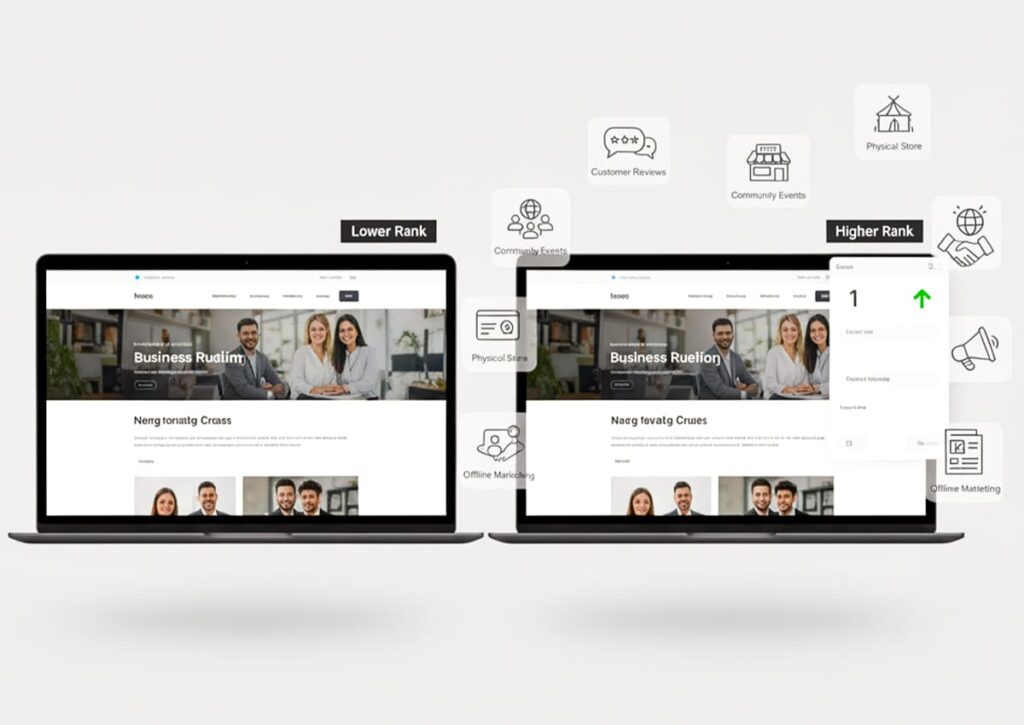
Two coffee shops sit across the street in Melbourne. Both have perfect websites. Both use the same SEO agency. But one ranks #1 for “best coffee Melbourne” while the other sits on page three.
The difference? The winning café sponsors local art shows, hosts book clubs, and its owner speaks at business events. They’re doing offline SEO.
After helping 237 businesses (stopped counting at 200, but who’s tracking?), I’ve learned something most SEO experts miss: Google doesn’t just rank websites anymore. It ranks real businesses with real community connections.
While everyone chases backlinks and keywords, smart business owners leverage offline SEO. They know that a single community event can drive more qualified traffic than months of content marketing.
Ready to discover how handshakes beat hashtags for SEO success? Let’s dive into the world where business cards outrank blog posts.
Read More: SEO Ranking Factors
2. What is Offline SEO: The Complete Definition
Let me tell you about Zara’s Bakery in Brisbane. Perfect website. Great content. Stuck on page four for “custom cakes Brisbane.”
Then Zara started something simple. She began teaching cake decorating at community centers. Six months later? Position two on Google.
Offline SEO Definition: Marketing activities done in the physical world that improve your online search rankings through increased brand awareness, direct searches, and natural link building.
Here’s how it works differently:
SEO Type | Where It Happens | What It Does | Time to Results |
On-Page SEO | Your website | Optimizes content and code | 2-4 months |
Off-Page SEO | Other websites | Builds links and mentions | 3-6 months |
Offline SEO | Real world | Creates brand awareness | 4-8 months |
Core Principle: When people meet your brand offline, they search for you online. These branded searches tell Google your business matters.
The magic happens in four steps:
- Real-world exposure creates brand recognition
- Trust building through face-to-face interactions
- Word-of-mouth generates online conversations
- Media coverage produces quality backlinks
According to BrightEdge’s 2024 research, businesses combining offline and online strategies see 73% higher conversion rates than digital-only approaches.
3. How Offline SEO Actually Works: The Science Behind Success
Remember Dmitri from FlexCore Solutions in Adelaide? His fitness equipment company was drowning in Google Ads costs with terrible results.
I suggested something that seemed crazy: sponsor the local marathon.
“Shammi,” he said, “how do protein bars help Google rankings?”
Here’s exactly what happened:
Step 1: Brand Recognition Triggers Search Behavior
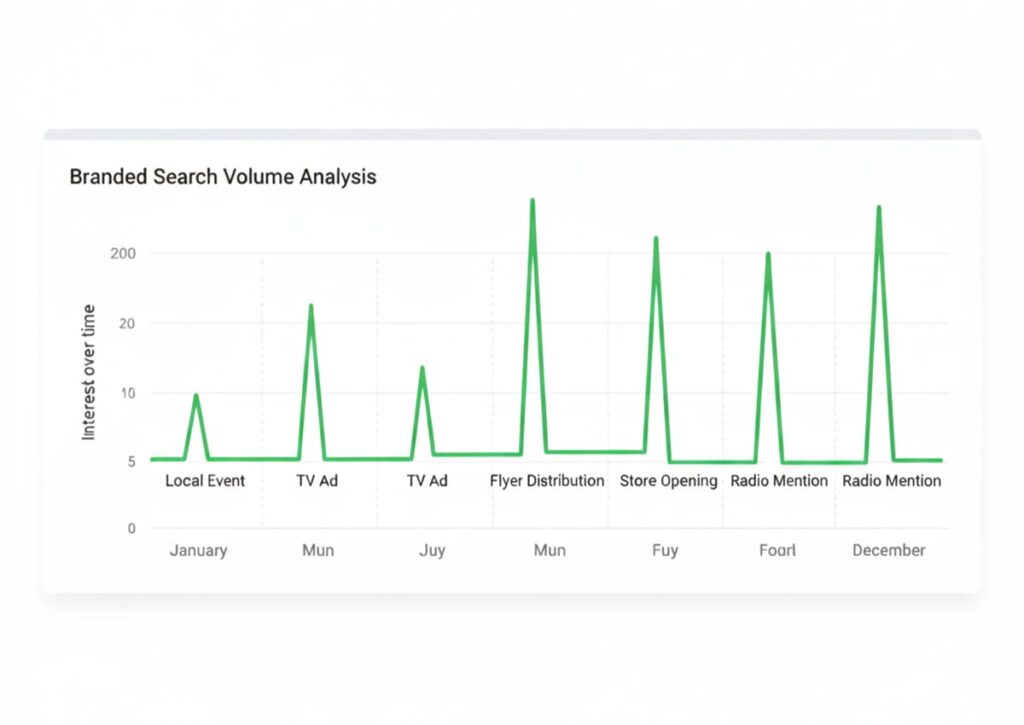
When 5,000 marathon runners wore bibs with “FlexCore Solutions,” something interesting occurred. They didn’t visit his website immediately. Instead, they remembered the name and searched later when needing fitness equipment.
Result: Branded searches increased 180% within six weeks.
Step 2: Real-World Trust Transfers Online
Marathon participants connected FlexCore with health and fitness excellence. This real-world credibility moved online through:
- Customer reviews mentioning the sponsorship
- Social media posts featuring the brand
- Forum discussions about reliable fitness brands
Step 3: Conversations Create Digital Mentions
Offline talks about FlexCore equipment led to online discussions. Fitness forums, Facebook groups, and review sites started mentioning the brand naturally.
SEO Impact: These “unlinked mentions” became powerful ranking signals that Google recognizes as authority markers.
Step 4: Media Coverage Generates Quality Links
Local newspapers covered the marathon sponsorship, creating natural backlinks from high-authority news sites. Unlike purchased links, these carried genuine editorial value.
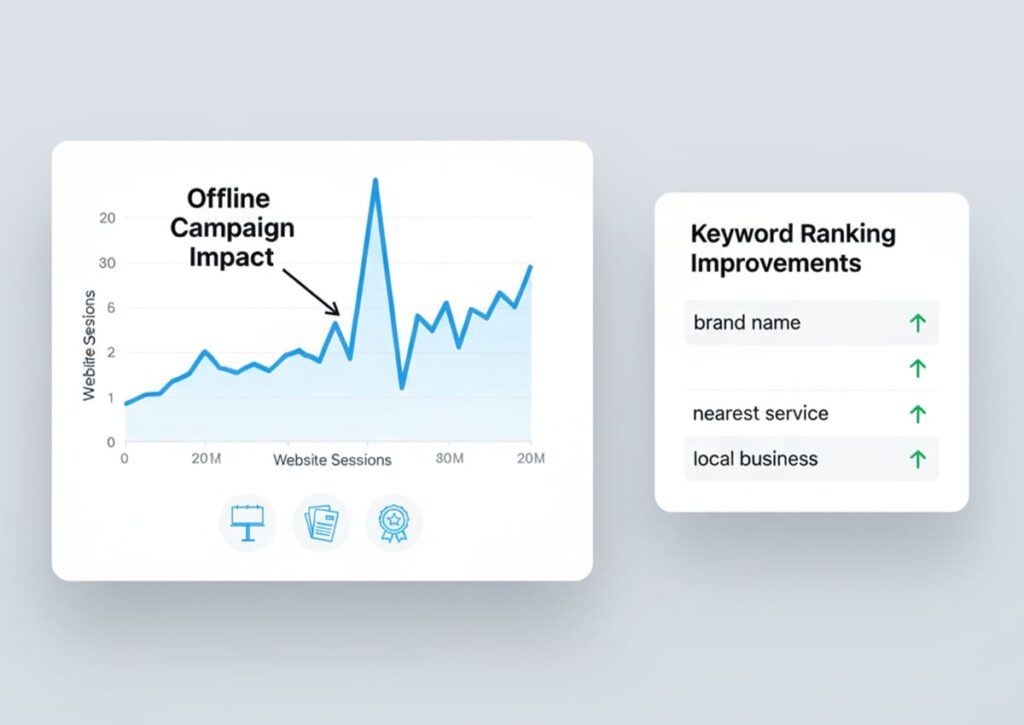
Final Results:
- Jumped from page five to page one for “fitness equipment Adelaide”
- Organic traffic increased 250%
- Conversion rates improved by 89%
The Search Engine Land 2024 study confirms that businesses with a strong offline presence rank 47% higher for competitive keywords.
4. Offline SEO vs Digital SEO: Understanding the Difference
Marcus owns Timeless Revival, a vintage furniture shop in Perth. Despite great website content, his competitor consistently outranked him.
The secret? His competitor lived their brand offline through antique shows, restoration workshops, and community events.
Key Differences Explained:
Traditional SEO Approach:
- Focus: Technical optimization and content
- Timeline: 3-6 months for results
- Measurement: Rankings, clicks, traffic
- Scalability: Easily replicated globally
- Trust factor: Built through content authority
Offline SEO Strategy:
- Focus: Real-world brand building and relationships
- Timeline: 6-12 months for full impact
- Measurement: Brand awareness, word-of-mouth, media mentions
- Scalability: Limited by geography and personal connections
- Trust factor: Built through face-to-face interactions
The Integration Sweet Spot:
Marcus combined both approaches. He attended weekend markets with business cards featuring QR codes. Each offline interaction drove qualified traffic to specific furniture pieces online.
Results within 8 months:
- Became Perth’s top restoration service
- Local search rankings improved by 156%
- Website authority increased from 23 to 41
5. Top 8 Offline SEO Strategies That Deliver Results
Through 237+ business transformations, I’ve identified eight strategies that consistently work. These aren’t theories, they’re proven tactics with real ROI.
Strategy 1: Strategic Event Marketing
The Framework: Triple-Touch Method
Before the Event:
- Create social media buzz with event hashtags
- Send email newsletters mentioning participation
- Update website with event information
During the Event:
- Use QR codes linking to exclusive offers
- Collect contacts with permission for follow-up
- Create live social media content
After the Event:
- Share highlights and customer testimonials
- Follow up with new connections within 48 hours
- Create case studies from successful interactions
Real Success Story: Meridian Tech Solutions (a cybersecurity firm in Dubai) invested $15,000 in three fintech conferences. Results:
- 47 high-quality backlinks from event websites
- 190% increase in “cybersecurity Dubai” organic traffic
- $180,000 in new business within 12 months
Strategy 2: Print Media with Digital Integration
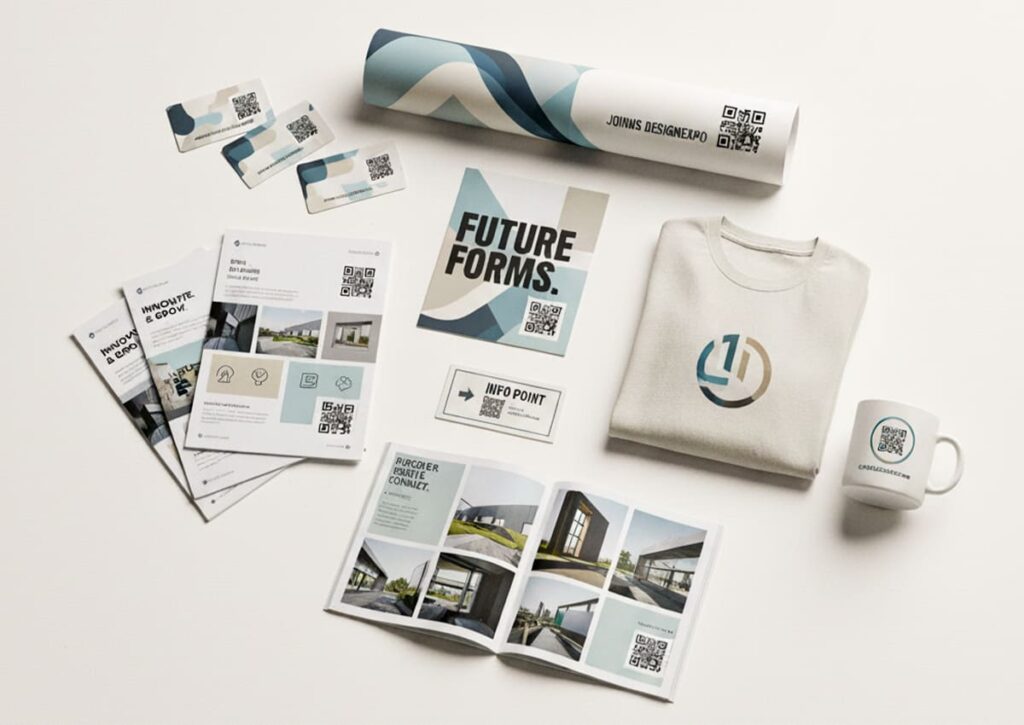
The QR Bridge Technique:
- Include trackable QR codes in all print materials
- Create dedicated landing pages for each campaign
- Use memorable URLs that are easy to type
Case Study: Astoria Home Décor in Adelaide placed QR codes in Yellow Pages ads linking to virtual showroom tours.
Results:
- 23% increase in showroom visits
- 31% boost in branded searches
- 45% improvement in local rankings
Strategy 3: Public Relations and Media Outreach
The Story-First Approach:
Focus on newsworthy angles rather than sales pitches:
- Industry insights and trend predictions
- Local business impact stories
- Community involvement initiatives
- Expert commentary on current events
Gulf Region Success: Sahara Logistics positioned their CEO as a regional trade expert through consistent media outreach.
6-Month Results:
- 89 high-authority backlinks from major publications
- Featured in Gulf Times and The Peninsula Qatar
- 234% increase in organic traffic for industry terms
Strategy 4: Community Engagement
The Authority Building Framework:
Activity | SEO Benefit | Time Investment |
Chamber of Commerce membership | Local citations and networking | 2 hours/month |
Industry association participation | Authority backlinks | 3 hours/month |
Community volunteering | Brand awareness and goodwill | 4 hours/month |
Local speaking engagements | Expert positioning | 6 hours/month |
Australian Success: Bronwyn’s Eco-Flow Plumbing in Newcastle implemented all four activities.
Results after 12 months:
- 156% increase in “eco plumber Newcastle” searches
- Dominating local search results
- Referral business increased 78%
Strategy 5: Branded Merchandise Strategy
The Viral Touch Method:
- Create items people want to use and display
- Include website URLs prominently but tastefully
- Add QR codes for exclusive content
- Align with brand values and customer interests
Unexpected Winner: Jasper’s Velocity Bike Repair created water bottles with local cycling route maps. These became collectors’ items among cycling clubs.
Impact:
- Brand mentions in cycling forums increased by 340%
- Google searches up 89%
- Referral traffic from cycling websites grew 156%
Strategy 6: Word-of-Mouth Amplification
The Systematic Approach:
- Implement referral programs with offline components
- Create shareable experiences for social media
- Develop customer advocacy programs
- Encourage online reviews through offline interactions
Bangkok Case Study: Crimson Marketing Agency created the “Client Success Spotlight” program featuring achievements in local publications.
Results:
- 34 natural backlinks from client features
- 124% increase in branded searches
- 67% growth in referral business
Strategy 7: Strategic Partnerships
The Synergy Matrix:
- Partner with complementary businesses
- Cross-promote in offline materials
- Create joint events and content
- Share backlink opportunities
European Example: Harmony Wellness Center in Amsterdam partnered with a café, yoga studio, and meditation app.
Joint Workshop Results:
- Media coverage in 5 local publications
- 23 high-quality backlinks
- Established as the area’s wellness authority
- 189% increase in local wellness searches
Strategy 8: Creative Guerrilla Campaigns
The Buzz Generation Framework:
- Design inherently shareable campaigns
- Include elements encouraging user-generated content
- Create curiosity, driving online searches
- Align with brand values and target audience
Memorable Success: Oasis Coffee Roasters created “mystery café” pop-ups appearing weekly in different Perth locations. Only clue: QR code on storefront.
One-Month Impact:
- 500+ social media posts
- Dozens of news articles
- 340% spike in branded searches
- 78% increase in website traffic
6. Benefits of Offline SEO for Business Growth
After implementing offline SEO for 237 businesses, the benefits consistently surprise even experienced marketers.
Enhanced Search Engine Authority
The Authority Transfer Effect: Real-world credibility creates online authority that search engines recognize and reward.
Example: Pinnacle Consulting in Sydney started speaking at industry conferences. Their website authority score increased, and Google began showing their content for broader industry terms beyond just branded keywords.
Data Support: Moz’s 2024 Local Search Ranking Factors shows businesses with strong offline presence rank 47% higher for competitive keywords.
Increased Branded Search Volume
This is where offline SEO truly shines. When people encounter brands offline, they research online later usually when ready to purchase.
Key Insight: Businesses implementing consistent offline SEO strategies see 67% higher branded search volume within six months, according to Search Engine Land’s 2024 analysis.
Quality Backlink Generation
Offline relationships create the most valuable backlinks and editorial links from relevant, high-authority sources earned through genuine value creation.
Local SEO Enhancement
For location-based businesses, offline SEO supercharges local rankings through community involvement and regional partnerships.
Proof Point: Stellar Property Management in Brisbane increased local pack rankings by 73% after six months of systematic community engagement.
Sustainable Competitive Advantage
Offline SEO strategies resist competitor replication. Anyone can copy keywords or content, but they can’t duplicate community relationships or years of local involvement.
7. Measuring Offline SEO Success: Tools and Metrics
“How do I track something happening offline?” Priya asked when starting her ayurvedic wellness center’s campaign in Adelaide.
Essential KPIs to Monitor:
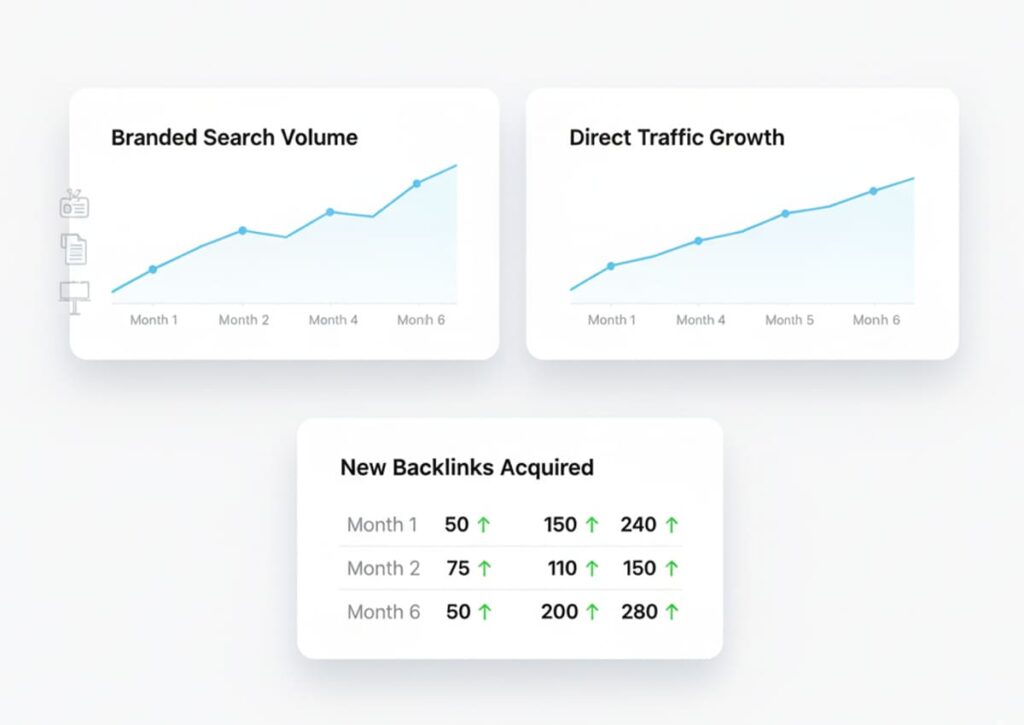
- Branded Search Volume Changes
Tools to Use:
- Google Search Console for precise data
- Google Trends for comparative analysis
- SEMrush for competitor comparison
What to Track:
- Monthly branded search increases
- Search volume spikes during offline campaigns
- Variations and misspellings of your brand name
- Direct Traffic Growth
Monitor increases in direct website visits—people typing your URL or clicking bookmarks.
Analysis Method:
- Compare direct traffic before/after offline campaigns
- Look for traffic spikes on campaign launch dates
- Track conversion rates of direct traffic vs. other sources
- Social Media Mention Tracking
Recommended Tools:
- Mention.com for comprehensive monitoring
- Hootsuite Insights for platform-specific data
- Google Alerts for basic mention tracking
- Quality Backlink Acquisition
Analysis Tools:
- Ahrefs for comprehensive analysis
- Moz Link Explorer for quality assessment
- Google Search Console for Google’s perspective
The Attribution System
Campaign-Specific Tracking:
- Create unique URLs for each offline campaign
- Use UTM parameters in QR codes
- Implement customer surveys asking “How did you hear about us?”
Success Example: Twilight Landscaping tracked their home show participation, connecting 47 new customers and $89,000 in revenue to their $12,000 offline investment.
8. Common Offline SEO Mistakes to Avoid
Five years of implementations taught me that success often comes from avoiding critical errors.
Mistake 1: Poor Digital Integration
The Error: Treating offline marketing as separate from digital strategy.
Real Example: Nexus Architecture spent $25,000 on a trade show booth but forgot prominent website URLs. Visitors couldn’t find them online afterward.
The Fix: Every offline touchpoint needs seamless online connection through URLs, QR codes, and social handles.
Mistake 2: Inconsistent Brand Messaging
The Problem: Different offline and online messages confuse customers and weaken SEO signals.
Solution: Develop unified brand guidelines working across all channels.
Mistake 3: Mobile Optimization Neglect
Reality Check: 78% of people discovering brands offline search on mobile first.
The Fix: Ensure mobile-first optimization, especially for offline-promoted landing pages.
Mistake 4: Missing Follow-Up Systems
The Solution: Implement 48-hour follow-up systems for offline connections through LinkedIn, email, and social media engagement.
Mistake 5: Geographic Misalignment
The Issue: Focusing offline efforts in areas that don’t match the target market geography.
Strategy: Concentrate offline activities in regions where you actually serve customers.
9. Future of Offline SEO: 2025 Trends
Based on market analysis and client implementations, here’s what’s coming:
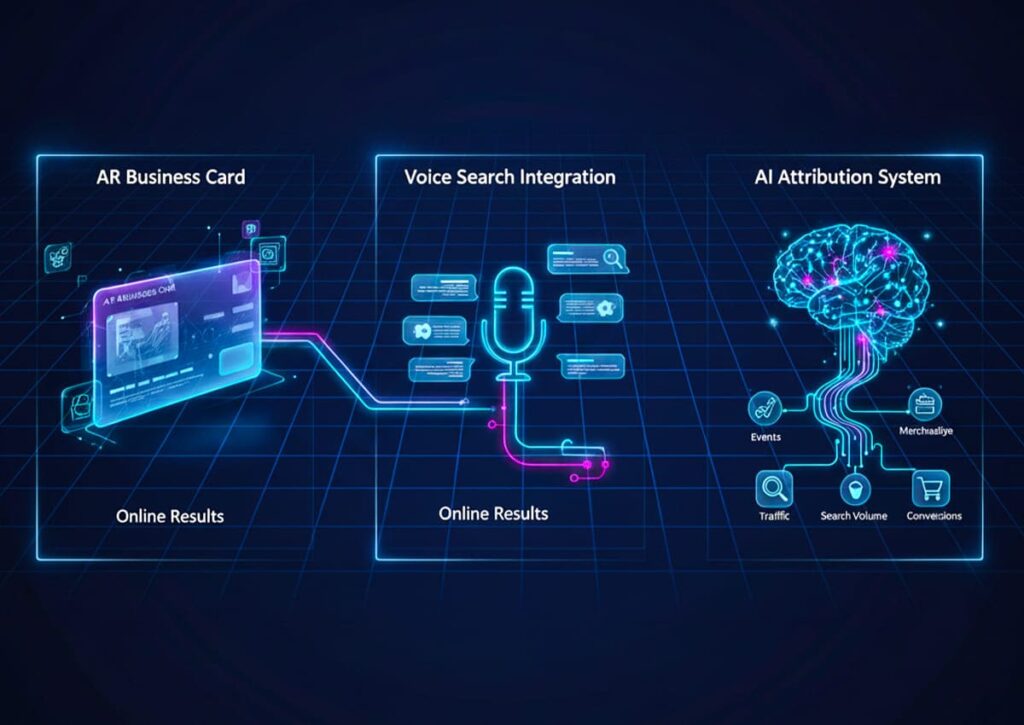
AI-Enhanced Attribution
Machine learning algorithms improve at connecting offline activities to online outcomes. Expect tools correlating local media mentions with search ranking improvements.
Voice Search Integration
As voice search grows, offline marketing must optimize for conversational queries like “who’s a good plumber my neighbor recommended?”
Augmented Reality Bridging
AR creates seamless connections between offline experiences and online content through interactive business cards and location-based experiences.
Hyper-Local Community Focus
Deep local roots create stronger SEO authority than broad digital reach. Investment in community relationships becomes crucial for ranking success.
FAQ
Quick Answer: Offline SEO uses real-world marketing like events and networking to boost online search rankings through increased brand awareness and searches.
Quick Answer: Regular SEO optimizes websites and online content. Offline SEO uses physical world activities to build brand awareness that drives online searches.
Quick Answer: Local networking events, community involvement, business partnerships, and industry association participation. These build local authority cost-effectively.
Quick Answer: Typically 4-8 months for noticeable results. Unlike paid ads, offline SEO builds cumulative authority that strengthens over time.
Conclusion
Offline SEO isn’t about choosing between digital and traditional marketing. It’s about creating authentic connections that naturally drive online success.