The Three Pillars of SEO Success
Think of SEO like building a house: On-page SEO is the interior design that makes everything beautiful and functional, Technical SEO is the foundation that keeps everything standing strong, and Off-page SEO is your reputation in the neighborhood that determines how others perceive your home’s value.
Here’s a sobering reality: According to 2026 SEO research, 68% of online experiences begin with a search engine, yet 95% of pages have zero backlinks, and most websites fail to achieve meaningful search rankings because they focus on just one aspect of SEO while completely ignoring the others. I learned this the hard way when I first started as an SEO strategist over a decade ago.
I once worked with an e-commerce client who had spent months building incredible backlinks and creating amazing content, yet their organic traffic was stuck at a measly 500 visitors per month. The problem? Their technical foundation was completely broken, Google couldn’t even crawl half their pages due to server errors and site speed issues that would make a dial-up connection look fast.
After fixing their technical issues while maintaining their strong content and backlink profile, their traffic exploded to over 15,000 monthly visitors within four months. That’s when I realized that mastering on page off page and technical SEO isn’t about choosing one approach, it’s about orchestrating all three as a unified strategy.
In this complete guide, you’ll discover how to implement a holistic SEO approach that addresses content optimization, authority building, and technical performance. By the end, you’ll understand exactly how these three pillars work together to create search engine domination that your competitors simply can’t replicate.
What Are the Three Types of SEO?
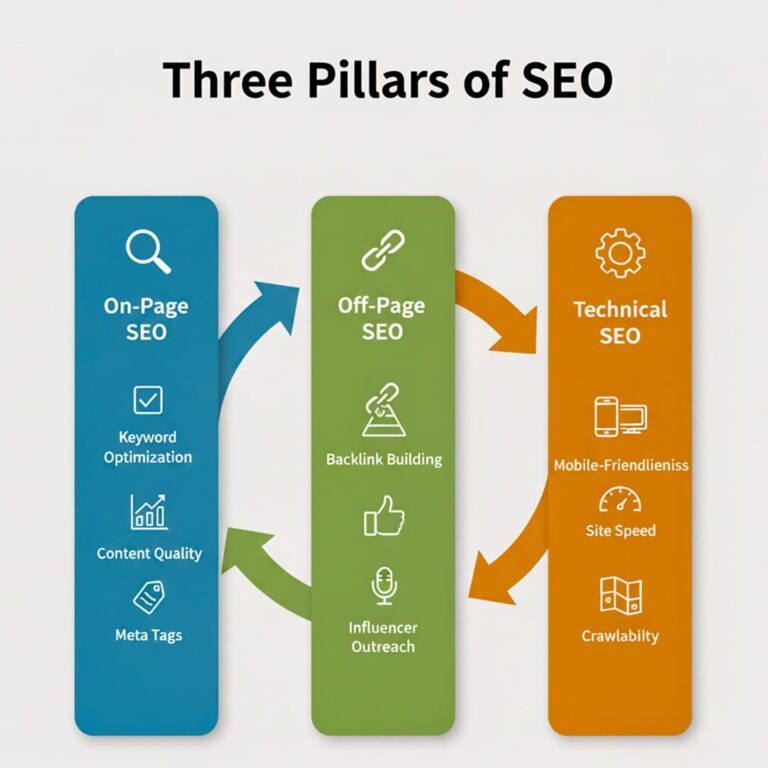
Before diving into specific tactics, let’s establish a clear understanding of each SEO type and how they interconnect to create sustainable search success.
Quick Interactive Assessment: Before diving deeper, rate your current SEO focus (1-10) for each pillar below:
- On-Page SEO (content & structure): ___/10
- Off-Page SEO (backlinks & authority): ___/10
- Technical SEO (site performance): ___/10
Quick Overview Table
SEO Type | Primary Focus | Main Goal | Key Metrics |
On-Page SEO | Content & Structure | Relevance & User Experience | CTR, Dwell Time, Rankings |
Off-Page SEO | External Authority | Trust & Credibility | Domain Authority, Backlinks, Brand Mentions |
Technical SEO | Site Infrastructure | Crawlability & Performance | Core Web Vitals, Indexation, Site Speed |
The Interconnected SEO Ecosystem
These three types of SEO work like a three-legged stool, remove any one leg, and the entire structure becomes unstable. Each pillar strengthens the others in ways that aren’t immediately obvious but become critical for long-term success.
On-page SEO ensures your content matches user intent and provides exceptional value. It’s about creating content that both search engines can understand and users find irresistibly helpful.
Off-page SEO builds the external signals that tell search engines your website is authoritative and trustworthy. It’s your digital reputation management system.
Technical SEO creates the infrastructure that allows search engines to efficiently discover, crawl, and index your content. Without it, even the best content and strongest backlinks become invisible to search engines.
Here’s a real-world example of how ignoring one pillar destroys results: A travel blog I audited had phenomenal content, detailed destination guides, stunning photography, and thousands of social shares. They’d also built impressive domain authority through strategic guest posting. Yet their organic traffic was declining month over month.
The culprit? Technical issues were wreaking havoc. Their site took over 8 seconds to load on mobile, had duplicate content across multiple URLs, and their XML sitemap hadn’t been updated in two years. Once we fixed these technical foundations, their traffic increased by 280% in just three months, proving that all three SEO pillars must work in harmony.
On-Page SEO - Mastering Content and Structure
What is On-Page SEO?
On-page SEO encompasses all optimizations you make directly on your website to improve search engine rankings and user experience. Unlike the keyword-stuffing tactics of the past, modern on-page SEO focuses on user intent, content quality, and Google’s E-E-A-T (Experience, Expertise, Authoritativeness, Trustworthiness) guidelines.
The game has fundamentally changed. Search engines now prioritize content that genuinely helps users accomplish their goals rather than content that simply repeats keywords. This shift means your on-page optimization must balance technical precision with authentic value creation.
Essential On-Page Elements
Content Optimization Strategies
Keyword Research and Implementation starts with understanding what your target audience actually searches for, not what you think they should search for. Use tools like Google’s “People Also Ask” section and related searches to uncover the real questions your audience is asking.
Focus on primary keywords with clear search intent, then support them with semantically related terms that naturally flow within your content. The goal isn’t keyword density, it’s comprehensive topic coverage that addresses user needs.
Content Quality and Depth means creating resources so valuable that other websites can’t help but reference them. Aim for content that thoroughly addresses user queries while remaining easily scannable. Use subheadings, bullet points, and short paragraphs to improve readability without sacrificing depth.
I once worked with a financial advisor whose 500-word blog posts were getting crushed by competitors. We transformed one post into a comprehensive 3,000-word guide covering every aspect of retirement planning. That single piece now ranks 1 for fifteen different retirement-related keywords and generates 40% of their organic leads.
HTML Optimization Fundamentals
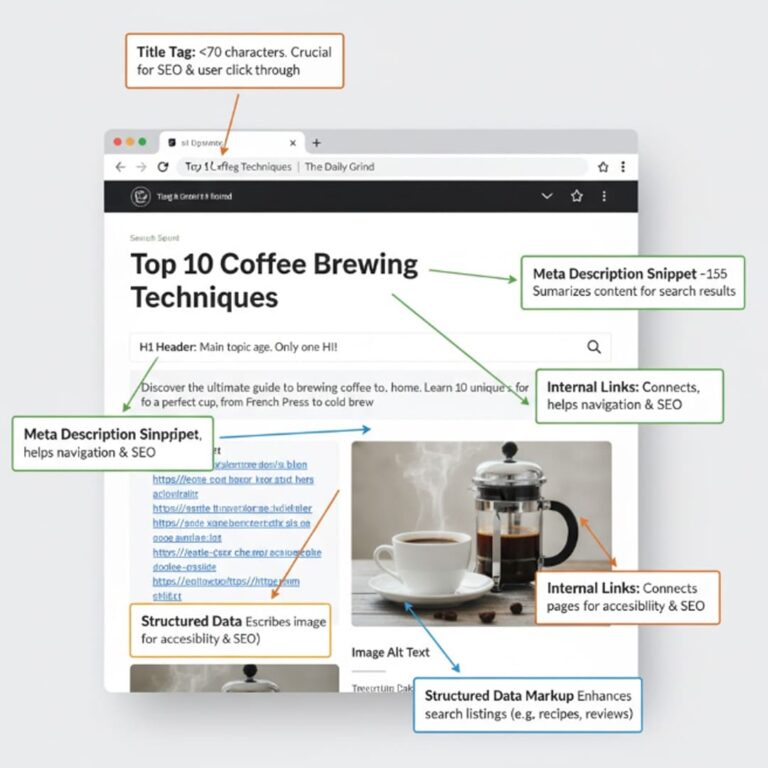
Title Tags and Meta Descriptions are your content’s first impression in search results. Craft compelling title tags that include your target keyword while staying under 60 characters. Write meta descriptions that entice clicks while accurately describing your content in 150-160 characters.
Your title tag should promise value and create curiosity. Instead of “SEO Tips,” try “7 SEO Strategies That Increased Our Traffic by 340% in 6 Months.”
Header Tag Hierarchy creates a logical content structure that both users and search engines can easily follow. Use H1 tags for main titles, H2 tags for primary sections, and H3-H6 tags for subsections. This hierarchy acts like a table of contents that guides readers through your content.
URL Structure should be clean, descriptive, and include your target keyword. Keep URLs short, remove unnecessary words, and use hyphens to separate words. A URL like “/complete-seo-guide” is far better than “/page-id-12345-seo-stuff-here.”
User Experience Factors
Internal Linking builds a web of related content that keeps users engaged while distributing page authority throughout your site. Use descriptive anchor text that gives context about the linked page. Strategic internal linking can increase page views per session by 30-50%.
Image Optimization involves more than just adding alt text. Use descriptive filenames, compress images for faster loading, and choose the right file format for each use case. Properly optimized images can improve page load speeds by 40% or more.
Advanced On-Page Techniques
Structured Data Markup helps search engines understand your content’s context and can earn you rich snippets in search results. FAQ schema, article schema, and review schema can dramatically improve your click-through rates.
Interactive Checkpoint: Take 30 seconds to analyze your current content. Does it answer these user intent questions?
- What problem does this solve?
- How comprehensive is the coverage?
- Can users scan and find answers quickly?
When we added schema markup to a law firm’s FAQ section, following Google’s structured data guidelines, their organic click-through rate jumped by 48% in just 30 days. The rich snippets made their listings stand out dramatically from competitors.
Topic Clusters involve creating pillar pages that comprehensively cover broad topics, then linking to cluster content that addresses specific subtopics. This approach demonstrates topical authority and helps search engines understand your content relationships.
Off-Page SEO - Building Authority and Trust
Understanding Modern Off-Page SEO
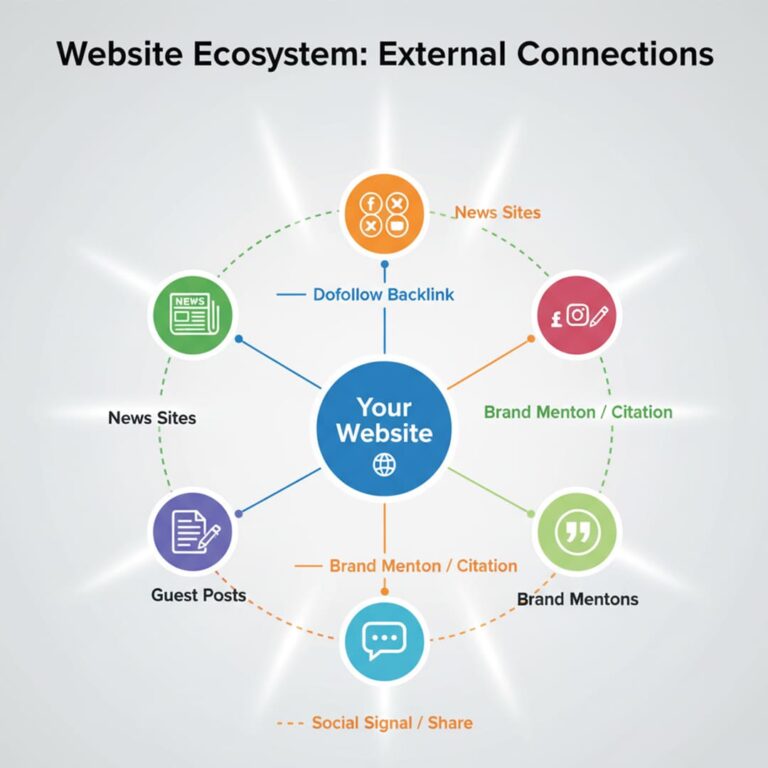
Off-page SEO has evolved far beyond simple link building into a comprehensive authority-building discipline. Today’s off-page strategies focus on building genuine authority, brand recognition, and trust signals that search engines increasingly value.
The emphasis has shifted from quantity to quality, with search algorithms becoming sophisticated enough to detect and penalize manipulative tactics. Modern off-page SEO requires patience, relationship building, and consistent value creation.
Strategic Link Building Approaches
High-Quality Backlink Acquisition
Editorial Links represent the gold standard of backlinks, they occur naturally when other websites reference your content as a valuable source. These links carry the most SEO weight because they’re genuine endorsements of your expertise.
Create linkable assets like original research, comprehensive guides, or industry studies that naturally attract editorial mentions. A single piece of original research can generate hundreds of high-quality backlinks over time.
Strategic Guest Posting focuses on building relationships with relevant, high-authority websites in your industry. The key is providing genuine value to their audience rather than simply pursuing link opportunities. Quality guest posts build relationships and establish thought leadership beyond their SEO benefits.
Link Quality Assessment
Not all backlinks are created equal. Evaluate potential backlinks based on domain authority, relevance to your niche, and the linking page’s content quality. A single link from a highly relevant, authoritative source often provides more SEO value than dozens of low-quality directory links.
Look for linking opportunities from websites that your target audience already trusts and visits regularly. These contextually relevant links pass both SEO value and actual referral traffic.
Beyond Traditional Link Building
Brand Mention Strategies
Unlinked Brand Mentions still provide SEO value even without direct links. Monitor your brand mentions across the web using tools like Google Alerts or Mention.com, then proactively reach out to convert mentions into backlinks when appropriate.
Sometimes a simple email asking a journalist or blogger to add a link to an existing mention can result in a high-quality backlink with minimal effort.
Digital PR and Content Marketing
Newsworthy Content Creation involves developing content that naturally attracts media attention. Industry surveys, trend analyses, and expert commentary can earn valuable coverage from news outlets and industry publications.
One SaaS brand I worked with created an annual industry report that became their most powerful link-building asset. That single piece of research generated over 200 high-quality backlinks and established them as a thought leader in their space.
Social Media Amplification doesn’t directly impact rankings, but it increases content visibility, potentially leading to more backlinks and brand mentions. Use social platforms to build relationships with influencers and journalists who might eventually link to your content.
Measuring Off-Page Success
Track key metrics including domain authority growth, quality backlink acquisition, brand mention frequency, and referral traffic. Focus on trends rather than absolute numbers, as off-page SEO typically shows results over longer timeframes.
Remember that off-page SEO is a marathon, not a sprint. Consistent effort over months and years builds the kind of authority that competitors struggle to replicate.
Technical SEO - Your Website's Foundation
Why Technical SEO is Critical
Technical SEO ensures search engines can efficiently crawl, index, and understand your website. Even the most brilliant content and strongest backlink profile can’t overcome fundamental technical issues that prevent search engines from accessing your pages.
Common technical problems that devastate rankings include slow page speeds, mobile usability issues, crawling errors, and poor site architecture. These issues create invisible barriers between your content and search engines, effectively making your optimization efforts worthless.
I once audited a retailer’s website that had been losing rankings for months despite increasing their content marketing budget. The culprit? Their recent site redesign had accidentally blocked Google from crawling their product pages. Six months of content creation had been completely wasted because of a simple robots.txt error.
Core Technical SEO Elements
Site Speed and Performance Optimization
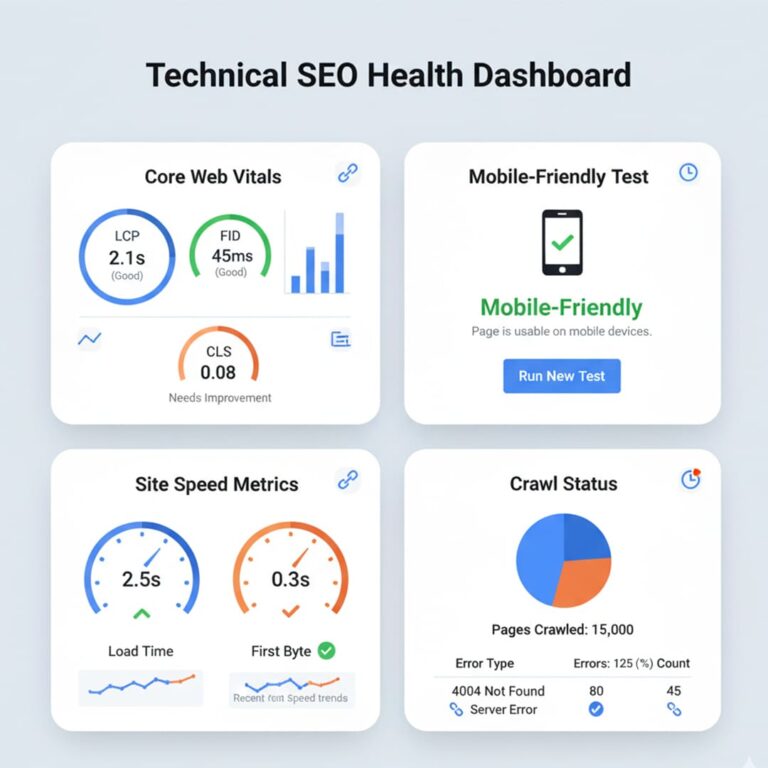
Core Web Vitals measure real user experience through three key metrics: Largest Contentful Paint (LCP), Interaction to Next Paint (INP), and Cumulative Layout Shift (CLS). Recent 2025 data shows that 75% of mobile sites fail to pass all Core Web Vitals assessments, directly impacting both rankings and user satisfaction.
Quick Technical Check: Test your site right now:
- Google PageSpeed Insights – Check your Core Web Vitals
- Mobile-Friendly Test – Verify mobile optimization
LCP measures loading performance and should occur within 2.5 seconds. INP measures interactivity and should be under 200 milliseconds. CLS measures visual stability and should be less than 0.1. Research indicates that 53% of users abandon sites that take more than 3 seconds to load.
Performance Optimization tactics include implementing image compression, browser caching, and content delivery networks (CDNs) to improve loading speeds. Minimize CSS and JavaScript files, and consider lazy loading for images below the fold.
When we optimized a retailer’s Core Web Vitals scores, their rankings improved across 80% of their product pages within six weeks. The performance improvements also increased their conversion rate by 23% as users had a better shopping experience.
Mobile Optimization Requirements
With mobile-first indexing, Google primarily uses your mobile version for ranking and indexing decisions. Current data shows that 92.6% of users access the internet via mobile devices, making mobile optimization critical for success.
Mobile Optimization Reality Check:
- Does your site load in under 3 seconds on mobile?
- Are buttons and links easily tappable?
- Is text readable without zooming?
Test your mobile experience regularly using real devices, not just browser developer tools. Many technical issues only become apparent when using actual mobile devices with varying connection speeds.
Crawling and Indexing
XML Sitemaps help search engines discover and understand your site structure. Create comprehensive XML sitemaps that include all important pages, then submit them through Google Search Console. Update sitemaps regularly as you add new content.
Robots.txt Configuration guides search engine crawlers efficiently through your site. Use robots.txt files to block access to unnecessary pages while ensuring important content remains easily accessible. Common mistakes include accidentally blocking important pages or entire sections of the site.
Advanced Technical SEO
Structured Data Implementation
Schema markup provides search engines with additional context about your content. Article schema, FAQ schema, and local business schema can enhance your search listings with rich snippets that improve visibility and click-through rates.
Properly implemented structured data can result in enhanced search listings that stand out from competitors and provide users with more relevant information before they click.
Security and Trust Signals
HTTPS implementation is no longer optional, it’s a confirmed ranking factor and essential for user trust. Ensure your SSL certificate is properly configured and all internal links use HTTPS protocols.
Mixed content warnings (HTTPS pages loading HTTP resources) can trigger browser security warnings that devastate user trust and conversion rates.
Technical SEO Monitoring
Regular technical audits identify and resolve issues before they impact rankings. Use tools like Google Search Console to monitor crawl errors, Core Web Vitals, and indexation status. Screaming Frog and similar crawling tools can identify technical issues that might not be visible in Search Console.
Set up automated monitoring for critical technical metrics so you can respond quickly when issues arise. Many technical SEO problems compound over time, so early detection is crucial.
Integration Strategy - How All Three Types Work Together
The Holistic SEO Approach
Successful SEO requires coordinated execution across all three pillars, not sequential implementation. Consider this real-world example: An e-commerce website came to us struggling with stagnant rankings despite quality product descriptions and decent backlinks from industry publications.
Our comprehensive audit revealed significant Core Web Vitals issues, crawling problems that prevented proper indexing of their product pages, and on-page optimization opportunities they’d never explored. Most importantly, their off-page strategy had focused on general authority building rather than product-specific relevance.
We implemented improvements across all three areas simultaneously: fixed technical infrastructure, optimized product pages for better user experience and search visibility, and launched targeted campaigns to build relevant product-focused backlinks.
The result? Organic traffic increased by 340% within six months, with revenue from organic search growing by 450%. This demonstrates that 91% of marketers report SEO improved website performance in 2024, but only when implemented as an integrated system rather than separate initiatives.
Implementation Prioritization
Phase 1: Technical Foundation (Weeks 1-4) involves addressing critical technical issues first. Fix crawling errors, improve Core Web Vitals, ensure mobile compatibility, and resolve any security issues. Without a solid technical foundation, other optimization efforts deliver diminished returns.
Phase 2: On-Page Optimization (Weeks 2-6) begins simultaneously with technical fixes. Optimize existing content for better user experience and search visibility while creating new, valuable resources. Focus on comprehensive topic coverage and proper internal linking structure.
Phase 3: Off-Page Authority Building (Weeks 4-12+) launches strategic link building and brand awareness campaigns. This phase requires the longest timeline but builds lasting authority that compounds over time.
The key is overlapping these phases rather than completing them sequentially. Technical improvements support better on-page performance, which creates more linkable content for off-page campaigns.
Avoiding Common Integration Mistakes
Many businesses make the mistake of focusing exclusively on one SEO type, often because it aligns with their existing strengths. Content creators gravitate toward on-page SEO, while PR professionals focus on off-page tactics, and developers prioritize technical improvements.
Others spread resources too thin across all areas, failing to achieve meaningful progress anywhere. The key is coordinated execution with proper resource allocation based on your specific situation and competitive landscape.
Don’t expect immediate results from integrated SEO campaigns. The synergy between all three pillars takes time to develop, but the long-term results far exceed what’s possible with single-focus approaches.
Essential SEO Tools and Resources
On-Page SEO Tools
Google Search Console provides critical performance monitoring, showing which queries drive traffic and how your pages appear in search results. Use it to identify content optimization opportunities and monitor click-through rates.
Yoast or RankMath offer content optimization guidance directly within your content management system. These plugins help ensure proper title tag structure, meta descriptions, and internal linking.
Screaming Frog crawls your website like a search engine, identifying technical content issues, broken links, and optimization opportunities across your entire site.
Off-Page SEO Tools
Ahrefs or SEMrush provide comprehensive backlink analysis, competitor research, and brand mention monitoring. Use these tools to identify link building opportunities and track your authority growth over time.
BuzzSumo helps identify trending content in your industry and the influencers who share it. This information guides both content creation and outreach strategies.
Google Alerts monitors brand mentions across the web for free, helping you identify opportunities to convert unlinked mentions into backlinks.
Technical SEO Tools
Google PageSpeed Insights analyzes your Core Web Vitals performance and provides specific optimization recommendations for both mobile and desktop versions of your site.
GTmetrix offers comprehensive speed testing with waterfall charts that show exactly which resources are slowing down your pages.
Schema.org validators ensure your structured data markup is properly implemented and error-free, helping you avoid issues that prevent rich snippets from appearing.
Conclusion and Next Steps
Mastering on page off page and technical SEO isn’t just about understanding each component, it’s about orchestrating all three as a cohesive strategy that builds sustainable competitive advantages. The websites that dominate search rankings don’t excel at just one aspect of SEO; they systematically optimize across all three pillars while maintaining focus on user value creation.
Your SEO Action Plan
Interactive Action Items: Choose your immediate next step:
Week 1-2: Run technical audit using Google Search Console
Week 2-3: Optimize your top 5 pages for user intent and Core Web Vitals
Week 3-4: Create linkable content and start strategic outreach
Ongoing: Monitor performance and iterate based on data
Click the checkboxes above as you complete each phase.
Simultaneously, audit your existing content for on-page optimization opportunities. Focus on improving user experience, comprehensive topic coverage, and internal linking structure. Don’t create new content until you’ve optimized what already exists.
Once your technical and on-page foundations are solid, launch strategic off-page campaigns to build authority and trust. Focus on creating valuable, linkable content while building relationships with relevant websites and influencers in your industry.
Remember that SEO is a long-term investment that compounds over time. The businesses that commit to comprehensive, integrated SEO strategies consistently outperform those that chase quick fixes or focus on single tactics.
Start with where you are, use what you have, and do what you can. The key is beginning with a coordinated approach that addresses all three SEO pillars systematically rather than randomly.
Ready to transform your search engine visibility? Begin by auditing your current SEO performance across all three pillars, then develop a coordinated implementation plan that addresses your specific needs and competitive landscape. The websites that dominate tomorrow’s search results are implementing integrated SEO strategies today.
Frequently Asked Questions About SEO
All three types of SEO are equally important for long-term success, but technical SEO should be addressed first. Without proper technical foundation, on-page and off-page efforts won't reach their full potential. Think of technical SEO as the foundation of your house, you can't build effectively without it.
However, once technical issues are resolved, the importance becomes more situational. New websites might prioritize content creation (on-page), while established sites might focus on authority building (off-page).
Technical SEO improvements often show results within 2-4 weeks, as search engines quickly recognize and reward better site performance and accessibility.
On-page SEO typically takes 1-3 months to impact rankings significantly, depending on your content quality and competitive landscape.
Off-page SEO requires the longest timeline, often 3-6 months or more, as building authority and trust signals takes time. However, off-page improvements often provide the most lasting results.
While focusing on one type might produce some results, comprehensive SEO success requires all three working together. Websites that ignore any pillar typically plateau at suboptimal performance levels and remain vulnerable to competitors who take a more holistic approach.
The most successful websites excel across all three areas, creating a competitive advantage that's difficult to replicate.
The most common mistake is implementing SEO strategies in isolation rather than as an integrated system. Many businesses also focus too heavily on short-term tactics instead of building sustainable, long-term optimization strategies.
Another critical error is expecting immediate results from SEO efforts. Sustainable SEO success requires patience, consistency, and continuous optimization based on performance data and algorithm updates.