
Understanding Modern Link Building Services
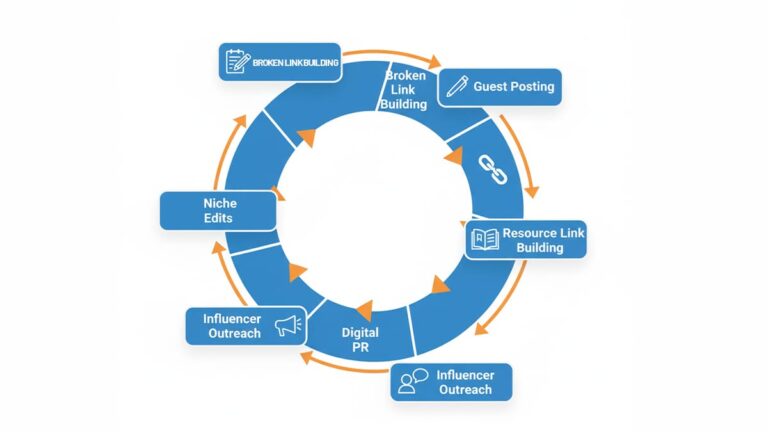
Core Types of Link Building Services → Diagram / flowchart (visual breakdown of the 6 main types with examples).
When analyzing why some websites dominate search results while others remain invisible, one pattern emerges consistently: authority backlinks.
Key Statistics:
- 55.2% of SEO specialists consider link building the most challenging part of SEO
- The 1 result in Google has 3.8x more backlinks than positions 2- 10
This disparity reveals why even perfectly optimized content fails to rank without external authority signals.
Modern link building services have evolved far beyond the directory submission tactics of the early 2000s. Today’s professional link building focuses on strategic relationship development, content-driven outreach, and sustainable authority building that aligns with Google’s evolving algorithm requirements.
These services bridge the gap between businesses with exceptional products or services and the digital authority needed to compete in search results.
Professional link building services operate as specialized agencies that develop, execute, and manage comprehensive backlink acquisition strategies.
Performance Data:
- 73.5% of link builders build fewer than 10 links per month
- Experienced professionals build 3.57x more links than beginners
- In-house efforts typically yield 2-3 links monthly due to resource constraints
Professional services leverage established publisher relationships, advanced prospecting tools, and dedicated teams to deliver consistent link acquisition at scale.
What Are Professional Link Building Services
Professional link building services encompass strategic backlink acquisition through ethical, sustainable methods that comply with search engine guidelines. These services combine technical SEO expertise with relationship building, content marketing, and digital PR to secure high-quality backlinks from authoritative websites within relevant industries.
The evolution from manipulative link schemes to strategic authority building reflects Google’s algorithm sophistication. The Penguin update⁶ fundamentally shifted the landscape, penalizing websites that engaged in link manipulation while rewarding those with genuine, editorial backlinks. Modern services focus exclusively on earning links through value creation rather than purchasing or manipulating them.
Today’s link building services integrate seamlessly with broader digital marketing strategies, supporting content marketing initiatives, brand awareness campaigns, and thought leadership development. This holistic approach ensures that link building efforts contribute to overall business objectives rather than existing as isolated SEO tactics.
Why Businesses Need Link Building Services
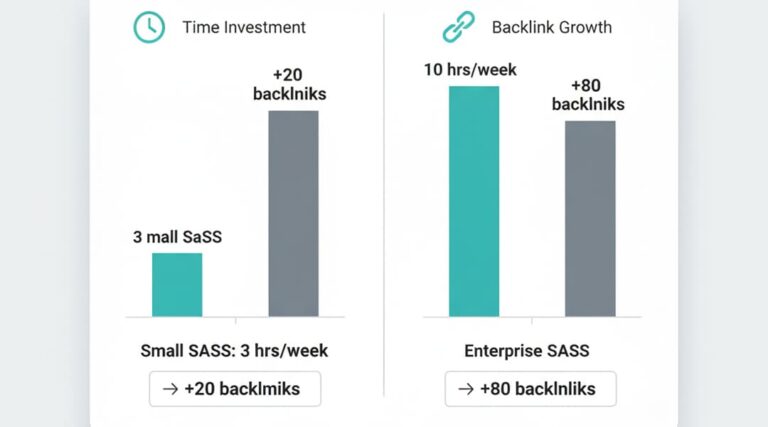
Internal link building efforts face significant challenges that professional services overcome through specialization and scale.
Time Investment Analysis:
- 54% of SEO experts can build 5-20 high-quality backlinks monthly⁷
- 32% need 1-2 hours per link, 24% require 3-5 hours per link⁸
- This time investment often proves prohibitive for businesses focused on core operations
Professional services maintain existing relationships with publishers, journalists, and industry influencers that would take years to develop independently. These established connections provide access to link opportunities unavailable through cold outreach, significantly improving success rates and reducing acquisition timelines.
Risk mitigation represents another critical advantage of professional services. Google’s penalties for manipulative link building can devastate organic visibility, making compliance expertise essential. Professional services stay current with algorithm updates, guideline changes, and industry best practices to ensure sustainable, penalty-resistant strategies.
A SaaS company case study illustrates these benefits clearly. After struggling with internal link building efforts that yielded three backlinks in six months, the company engaged a professional service. Within the first quarter, they secured 24 high-quality backlinks from industry publications, resulting in 156% organic traffic growth and 89% improvement in target keyword rankings.
Link Building vs Traditional Marketing
Link building differs fundamentally from traditional marketing channels through its compounding, long-term value creation. While paid advertising generates immediate traffic that disappears when spending stops, quality backlinks continue driving referral traffic and authority signals indefinitely. This creates an appreciating digital asset rather than a recurring expense.
Cost-effectiveness analysis reveals link building’s superior ROI potential. According to 2025 data, almost 40% of businesses spend between $1,000 and $5,000 on link building each month¹⁰, while high-quality links can cost over $1,500 each¹¹.
A comprehensive link building campaign costing $5,000 monthly can generate organic traffic value equivalent to $15,000-25,000 in paid advertising spend. The traffic quality often exceeds paid channels since users discover content through editorial recommendations rather than promotional messages.
Unlike traditional advertising that requires ongoing investment to maintain visibility, successful link building campaigns create momentum. Each quality backlink enhances domain authority, making future link acquisition easier while existing links continue providing value. This compounding effect makes link building one of the most scalable marketing investments available.
Core Types of Link Building Services
1. Content-Driven Link Acquisition
Guest Posting Services
Guest posting services identify high-authority websites within target industries and create valuable content that naturally incorporates backlinks to client websites. Success depends on editorial standards that prioritize reader value over link placement, ensuring content meets publisher requirements while achieving link building objectives.
Effective guest posting services maintain databases of vetted publications with established domain authority, engaged readerships, and editorial standards that align with Google’s quality guidelines¹. They analyze content performance, audience engagement metrics, and linking domain diversity to prioritize opportunities that deliver maximum SEO value.
The content creation process involves comprehensive research to develop unique angles that resonate with target audiences while naturally supporting link inclusion. Professional services employ experienced writers familiar with industry terminology, audience preferences, and editorial requirements across diverse sectors.
A niche e-commerce case study demonstrates guest posting effectiveness. An outdoor gear retailer worked with a specialized service to publish 12 guest posts over six months on adventure travel blogs, outdoor lifestyle publications, and gear review sites. This strategy generated 18 direct backlinks and 31 additional organic mentions, resulting in 240% growth in outdoor equipment keyword rankings.
2. Linkable Asset Development
Linkable asset creation focuses on developing content so valuable that other websites naturally reference and link to it. These assets include original research studies, interactive calculators, comprehensive industry guides, and data-rich reports that serve as authoritative resources within specific niches.
Original research represents the most effective linkable asset type, as data-driven insights attract citations from journalists, industry publications, and competitor content. Professional services identify research gaps within target industries, conduct surveys or data analysis, and present findings in formats optimized for media pickup and citation.
Interactive tools and calculators provide ongoing link acquisition opportunities since they offer practical value that encourages bookmarking and sharing. A mortgage calculator, ROI assessment tool, or industry-specific analyzer becomes a resource that continues attracting backlinks long after initial publication.
Industry reports and whitepapers establish thought leadership while generating backlinks from organizations citing authoritative research. These assets require significant investment in research, analysis, and professional presentation but typically generate 50-200 backlinks over their lifetime, making them highly cost-effective link building investments.
3. Relationship-Based Link Building
Digital PR Campaigns
Digital PR combines traditional public relations strategies with link building objectives, focusing on generating media coverage that includes backlinks to client websites. This approach leverages newsworthy angles, industry expertise, and journalist relationships to secure editorial mentions in authoritative publications.
Media outreach involves identifying journalists covering relevant industries and providing them with valuable story angles, expert commentary, or exclusive data that supports their editorial needs. Professional services maintain media databases, track journalist preferences, and develop pitching strategies that align with editorial calendars and current events.
Newsworthy angle development transforms routine business activities into compelling stories that attract media attention. Product launches become industry trend analyses, company milestones illustrate market growth patterns, and executive insights provide expert perspective on current events.
Press release optimization ensures that company announcements receive maximum distribution and link acquisition potential. Professional services craft releases that appeal to both search engines and journalists while including strategic anchor text and contextual links that support SEO objectives.
4. Influencer and Expert Collaborations
Industry thought leader partnerships create opportunities for natural backlinking through collaborative content, expert roundups, and joint research initiatives. These relationships provide access to established audiences while generating authoritative backlinks from respected industry figures.
Expert roundup participation involves contributing insights to comprehensive industry analyses that multiple experts support with their knowledge and authority. These roundups typically generate significant social sharing and backlinks as participants promote the collaborative content to their networks.
Podcast guest appearances offer unique link building opportunities since most shows include guest websites in show notes or episode descriptions. Professional services identify relevant podcasts, develop compelling pitch angles, and prepare talking points that naturally incorporate client expertise and website references.
Speaking engagement opportunities at industry conferences, webinars, and virtual events often include speaker biography links and presentation material references. These high-authority backlinks from event websites provide significant SEO value while establishing speakers as recognized industry experts.
5. Technical Link Acquisition Methods
Broken Link Building
Broken link building identifies non-functional links on authoritative websites and suggests client content as valuable replacements. This strategy provides mutual benefit by helping website owners fix user experience issues while generating relevant backlinks for clients.
Broken link identification utilizes tools like Ahrefs, Screaming Frog, and custom crawling scripts to systematically analyze target websites for 404 errors, redirect chains, and other technical issues affecting user experience. Professional services focus on resource pages, industry directories, and content-rich websites where broken links commonly occur.
Content gap analysis ensures that replacement suggestions align with the original linked content’s purpose and value proposition. Services either identify existing client content that matches broken link contexts or develop new resources specifically designed to serve as superior replacements.
Outreach template optimization improves response rates by emphasizing the value provided to website owners rather than focusing solely on link acquisition benefits. Successful templates demonstrate genuine interest in helping improve user experience while professionally presenting replacement suggestions.
6. Resource Page Link Building
Resource page link building targets curated lists of industry tools, references, and recommended websites maintained by educational institutions, industry organizations, and authoritative publications. These pages provide high-value link opportunities since inclusion implies editorial endorsement and authority recognition.
Industry resource page identification involves systematic research to locate relevant pages using advanced search operators, industry keywords, and competitor backlink analysis. Professional services maintain databases of resource pages across different industries, tracking update frequencies and inclusion criteria.
Qualification criteria assessment ensures that client websites and content meet resource page requirements before outreach begins. This includes domain authority thresholds, content quality standards, and relevance requirements that resource curators enforce.
Relationship building with resource curators involves providing ongoing value through industry insights, content recommendations, and networking opportunities that extend beyond individual link requests. These relationships facilitate future inclusions and referral opportunities.
Evaluating Link Building Service Providers
Essential Criteria for Service Selection
7. Transparency and Reporting Standards
Professional link building services should provide comprehensive documentation of all link placement activities, including target website details, content creation processes, and acquisition timelines. Transparency ensures clients understand exactly what they’re purchasing while enabling strategic decision-making based on concrete performance data.
Link placement documentation must include source website authority metrics, content context analysis, and anchor text distribution tracking. Quality services provide monthly reports detailing new acquisitions, relationship development progress, and competitive positioning improvements resulting from their efforts.
Quality metrics and measurement systems should encompass both quantitative indicators like domain authority growth and qualitative assessments such as link relevance and editorial context. Professional services track referring domain diversity, anchor text distribution, and traffic attribution to demonstrate comprehensive campaign effectiveness.
Regular progress reporting enables clients to monitor ROI and adjust strategies based on performance data. Effective reporting includes trend analysis, competitive benchmarking, and clear correlation between link building activities and organic search improvements.
8. White Hat Practice Verification
Google guideline compliance represents the foundation of sustainable link building strategies. Professional services must demonstrate comprehensive understanding of search engine quality guidelines and implement strategies that strengthen rather than jeopardize long-term organic visibility.
Risk assessment protocols should identify potentially harmful link opportunities before outreach begins, protecting clients from penalties associated with manipulative link schemes or low-quality website associations. Services should maintain blacklists of risky domains and regularly audit their link portfolios for emerging threats.
Sustainable long-term strategies focus on relationship building and value creation rather than exploiting temporary algorithm gaps or manipulative tactics. Quality services invest in approaches that strengthen over time rather than seeking quick wins that may become liabilities.
Industry Specialization and Expertise
9. Niche-Specific Link Building
SaaS and technology sector expertise requires understanding of technical audiences, industry publications, and specialized content formats that resonate with software buyers and users. Services specializing in this sector maintain relationships with technology journalists, industry analysts, and developer communities.
E-commerce and retail specialization involves different strategies focused on consumer audiences, seasonal opportunities, and product-centric content that drives both links and sales. Specialized services understand retail media landscapes, influencer networks, and consumer publication editorial requirements.
Professional services and B2B focus demands expertise in longer sales cycles, decision-maker targeting, and thought leadership development that supports complex purchasing processes. B2B link building often emphasizes authority building over direct conversion optimization.
Healthcare and finance compliance requirements necessitate specialized knowledge of industry regulations, ethical considerations, and editorial standards that govern content in regulated sectors. Services working in these industries must understand HIPAA, FDA, SEC, and other regulatory frameworks affecting content and linking strategies.
Scale and Capacity Assessment
Monthly link acquisition targets should align with client objectives while remaining realistic based on industry competition and content investment levels. Professional services should provide transparent capacity assessments and timeline expectations based on similar client experiences.
Team size and expertise levels directly impact service quality and campaign success rates. Clients should evaluate the experience levels of account managers, content creators, and outreach specialists assigned to their campaigns.
Tool access and technology stack capabilities determine the sophistication of prospecting, analysis, and reporting capabilities available to clients. Premium tools enable more effective targeting and measurement than basic alternatives.
Quality control processes ensure that all link placements meet established standards before client billing occurs. Professional services should maintain internal review systems and performance benchmarks that protect client investments.
10. Pricing Models and Service Packages
Performance-Based vs Fixed Fee Structures
Success-based pricing considerations align service provider incentives with client objectives but may encourage quantity over quality focus if not properly structured. Performance-based models work best when success metrics emphasize authority building rather than raw link counts.
Monthly retainer benefits include predictable investment levels and strategic planning capabilities but may not reflect varying effort requirements across different campaign phases. Retainer models work well for ongoing campaigns with consistent activity levels.
Project-based engagement scenarios suit specific objectives like new product launches, rebranding initiatives, or competitive response campaigns. These engagements provide focused attention on particular goals without ongoing commitment requirements.
Service Package Comparison
Starter packages for small businesses typically include 3-5 high-quality backlinks monthly through guest posting and resource page targeting. These packages focus on foundational authority building within limited budgets while establishing measurement systems for future scaling.
Enterprise-level comprehensive solutions encompass multiple link acquisition channels, dedicated account management, and advanced reporting systems. Enterprise packages often include content creation, digital PR campaigns, and strategic consulting beyond basic link placement.
Custom strategy development options provide tailored approaches for unique industries, competitive situations, or specific business objectives. Custom strategies require extensive research and planning but deliver precisely targeted results for complex requirements.
Professional Link Building Strategies That Work
11. Authority Building Through Strategic Partnerships
Co-marketing and Joint Content Creation
Partner identification and qualification processes focus on companies serving complementary audiences without direct competitive overlap. Successful partnerships combine resources to create content that provides mutual benefit while generating backlinks for all participants.
Mutual benefit optimization ensures that collaborative initiatives serve each partner’s marketing objectives while creating content valuable enough to attract third-party citations and links. Joint research studies, industry reports, and expert panels often generate significant backlinking opportunities.
Content collaboration frameworks establish clear expectations, responsibility divisions, and success metrics for partnership initiatives. Structured approaches prevent misunderstandings while maximizing the link building potential of collaborative efforts.
Expert Source Positioning
HARO and journalist source platforms connect industry experts with reporters seeking authoritative quotes and insights for their articles. Regular participation in source platforms generates high-authority backlinks from major publications while establishing thought leadership positioning.
Industry commentary and thought leadership development involves proactively creating perspectives on industry trends, regulatory changes, and market developments that journalists find valuable for their coverage. Consistent expert positioning increases media outreach and citation frequency.
Media relationship development extends beyond individual story opportunities to create ongoing collaboration between experts and journalists covering relevant industries. These relationships provide inside access to upcoming stories and exclusive commenting opportunities.
Content Marketing Integration
Strategic Content Calendar Alignment
Link building campaign synchronization with content marketing initiatives creates natural opportunities for backlink inclusion while supporting broader marketing objectives. Coordinated campaigns amplify reach and effectiveness across multiple channels.
Seasonal opportunity capitalization involves timing link building outreach to coincide with industry events, seasonal trends, and news cycles when target publications are most receptive to relevant content and expert insights.
Evergreen asset development creates lasting resources that continue attracting backlinks over time while supporting various link building strategies. Comprehensive guides, research databases, and interactive tools provide ongoing value that encourages natural citation.
Multi-Channel Content Distribution
Social media amplification strategies increase content visibility and discovery potential, often leading to organic backlink acquisition as content creators discover and reference shared resources. Strategic social distribution enhances overall link building effectiveness.
Email outreach campaign integration combines direct relationship building with content promotion to maximize link acquisition opportunities while nurturing professional relationships that support future campaigns.
Community engagement optimization involves active participation in industry forums, professional associations, and online communities where target audiences gather. Genuine community involvement often leads to natural linking opportunities and relationship development.
12. Advanced Link Acquisition Techniques
Competitor Analysis and Gap Identification
Backlink profile analysis tools enable systematic identification of competitor linking strategies, target websites, and content formats that generate successful backlink acquisition. This analysis reveals opportunities and strategic approaches proven effective within specific industries.
Opportunity identification processes compare competitor backlink profiles with client profiles to reveal gaps where competitors have successfully acquired links but clients have not. These gaps represent immediate targeting opportunities with demonstrated success potential.
Competitive advantage development involves creating superior content, tools, or resources that provide better value than competitor alternatives. Superior alternatives often successfully acquire backlinks previously directed to competitor resources.
Local and Geo-Targeted Link Building
Local business directory optimization ensures consistent NAP (Name, Address, Phone) information across relevant directories while targeting industry-specific and location-based listings that support local search visibility.
Regional media and publication outreach targets local newspapers, magazines, and industry publications that cover specific geographic markets. Local media relationships often provide easier access and higher success rates than national publication targeting.
Community involvement and sponsorship links result from genuine local business participation rather than purely SEO-motivated activities. Authentic community engagement naturally generates local backlinks while supporting broader business objectives.
Measuring Link Building Service Success
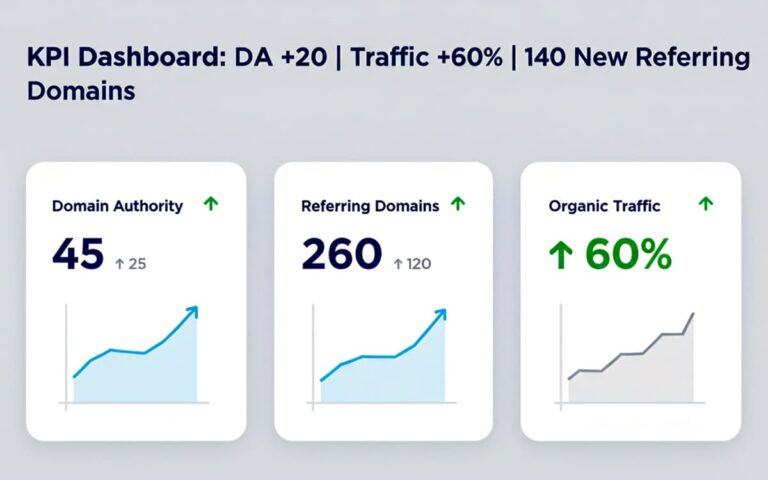
Key Performance Indicators and Metrics
Quality-Focused Measurement
Domain authority and trust metrics provide indicators of overall backlink profile strength and search engine trust signals. While not direct ranking factors, these metrics correlate strongly with organic search performance and competitive positioning.
Referring domain diversity analysis tracks the breadth of websites linking to client domains, as search engines value backlinks from varied sources over multiple links from single domains. Diversity metrics indicate natural link acquisition patterns.
Link relevance and contextual placement assessment evaluates whether backlinks appear in appropriate content contexts that support their SEO value. Editorial links within relevant content provide significantly more value than sidebar or footer placements.
Business Impact Assessment
Organic traffic growth attribution connects link building activities with measurable increases in search engine traffic, helping justify campaign investments through clear performance correlation. Attribution analysis isolates link building impact from other marketing activities.
Keyword ranking improvements demonstrate direct SEO benefits resulting from increased domain authority and topical relevance signals provided by strategic backlink acquisition. Ranking improvements translate directly to increased visibility and traffic potential.
Conversion rate optimization through referral traffic analysis identifies which backlinks generate not only traffic but qualified visitors who engage with website content and complete desired actions. High-converting referral sources inform future targeting strategies.
Reporting and Analytics Framework
Monthly Performance Reviews
Link acquisition velocity tracking monitors the pace of new backlink acquisition to ensure campaigns maintain consistent progress toward established objectives. Velocity metrics help identify successful strategies and areas requiring adjustment.
Quality score improvements track the overall strength of the backlink profile through composite metrics that consider authority, relevance, and diversity factors. Quality improvements indicate sustainable authority building rather than manipulative tactics.
Competitive positioning analysis compares client backlink profiles with key competitors to track relative authority building and identify emerging competitive threats or opportunities. Competitive context provides strategic direction for future efforts.
Long-term ROI Evaluation
Organic traffic value calculation estimates the monetary value of increased search traffic based on conversion rates and customer lifetime values. This calculation provides concrete ROI justification for link building investments.
Brand mention and awareness metrics track increases in unlinked brand mentions, social references, and industry recognition that often result from successful link building campaigns. Brand awareness contributes to long-term authority building beyond direct SEO benefits.
Customer acquisition cost reduction analysis evaluates how improved organic visibility reduces dependence on paid advertising for customer acquisition. Link building success often enables reduced paid advertising spending while maintaining lead generation levels.
Common Pitfalls and How Professional Services Avoid Them
Black Hat Practice Identification
Link Scheme Recognition
Private blog network identification involves recognizing patterns that indicate artificial link networks designed solely for SEO manipulation. Professional services maintain databases of known PBN indicators and regularly audit potential linking opportunities for these warning signs.
Paid link marketplace avoidance requires understanding the difference between legitimate sponsored content opportunities and manipulative paid linking schemes that violate search engine guidelines. Quality services focus on editorial relationships rather than transactional link purchases.
Low-quality directory submission risks include automated submissions to irrelevant directories that provide no value to users while potentially triggering algorithmic penalties. Professional services carefully vet directory opportunities for editorial value and relevance.
Penalty Prevention Strategies
Google algorithm update preparation involves staying current with search engine guideline changes and proactively adjusting strategies to maintain compliance with evolving requirements. Professional services monitor algorithm updates and adjust tactics accordingly.
Risk assessment protocols evaluate potential linking opportunities for penalty risks before outreach begins. These assessments consider domain quality, content relevance, and historical penalty patterns to protect client investments.
Recovery and remediation processes address situations where previous link building efforts may have created penalty risks. Professional services provide disavowal guidance and recovery strategies for clients with compromised backlink profiles.
Quality Control and Assurance
Link Placement Standards
Editorial context requirements ensure that backlinks appear within relevant content that provides genuine value to readers rather than existing solely for SEO purposes. Editorial placements provide superior long-term value compared to promotional insertions.
Anchor text diversity maintenance prevents over-optimization patterns that may trigger algorithmic penalties while ensuring that backlink anchor text appears natural and varied. Proper diversity includes branded, generic, and keyword-focused variations.
Follow vs no-follow link balance reflects natural linking patterns where some backlinks include no-follow attributes while others provide direct ranking value. Professional services maintain appropriate balance without artificially manipulating link attributes.
Choosing the Right Link Building Service for Your Business
Business Size and Resource Considerations
Startup and Small Business Solutions
Budget-conscious service options focus on high-impact strategies that provide maximum authority building within limited investment parameters. Starter packages typically emphasize foundational link building and relationship development over comprehensive campaigns.
Focused niche targeting strategies concentrate efforts on specific industry segments where startups can achieve authority recognition more efficiently than broad market targeting. Niche focus enables deeper relationship building within relevant communities.
Scalable growth frameworks provide pathways for expanding link building efforts as businesses grow and marketing budgets increase. Initial strategies should establish foundations that support future scaling rather than requiring complete strategic overhauls.
Enterprise-Level Requirements
Multi-domain link building campaigns address complex organizational structures where multiple websites or regional domains require coordinated authority building strategies. Enterprise campaigns manage portfolio-wide link building while maintaining individual site focus.
International market expansion support involves understanding regional search engines, cultural differences, and local authority signals that influence international SEO success. Global campaigns require specialized expertise in multi-market link building.
Compliance and risk management protocols address enterprise-level concerns about brand reputation, regulatory compliance, and systematic risk management across comprehensive campaigns. Enterprise services provide enhanced oversight and documentation.
Industry-Specific Service Selection
Regulated Industry Considerations
Healthcare and medical compliance involves understanding HIPAA requirements, FDA regulations, and medical editorial standards that govern content creation and linking strategies within healthcare sectors. Specialized services maintain compliance expertise.
Financial services regulations include SEC guidelines, privacy requirements, and industry-specific ethical considerations that influence content development and linking strategies. Financial sector link building requires specialized regulatory knowledge.
Legal and professional service requirements encompass state bar regulations, professional standards, and ethical guidelines that govern attorney marketing and professional service promotion through link building activities.
Competitive Market Strategies
High-competition keyword targeting requires sophisticated strategies that can compete with established authority websites for valuable search terms. Competitive markets demand premium content creation and strategic relationship development.
Market share expansion through authority building involves systematic competitive analysis and strategic positioning that enables newer market entrants to challenge established competitors through superior authority development.
Brand differentiation through expert positioning creates unique value propositions that attract natural linking and media attention while establishing competitive advantages that extend beyond traditional SEO metrics.
Future of Link Building Services
Emerging Trends and Technologies
AI-Assisted Link Prospecting
Automated opportunity identification utilizes artificial intelligence to analyze vast databases of potential linking opportunities, identifying prospects that match specific criteria while reducing manual research requirements. AI tools enhance prospecting efficiency and accuracy.
Personalization at scale combines AI analysis with human creativity to develop customized outreach messages that resonate with individual recipients while maintaining the personal touch essential for successful relationship building.
Response tracking and optimization systems analyze outreach performance patterns to identify successful approaches and continuously refine messaging strategies. AI-powered optimization improves response rates and campaign effectiveness over time.
Voice Search and Featured Snippet Optimization
Question-based content targeting anticipates voice search queries and features snippet opportunities that influence how users discover and interact with content. Link building strategies increasingly focus on content formats optimized for voice search results.
Local search integration addresses the growing importance of local SEO signals in voice search results, where location-based queries often trigger local business recommendations. Local link building becomes increasingly important for voice search visibility.
Mobile-first indexing considerations ensure that link building strategies account for mobile user experience factors that influence search engine evaluation of website authority and relevance signals.
Evolving Search Engine Requirements
EEAT Signal Enhancement
Expert author attribution involves clearly identifying content creators and their qualifications to support search engine assessment of content expertise. Link building increasingly emphasizes author authority alongside website authority.
Authoritative source verification requires demonstrating connection to recognized industry authorities, professional credentials, and institutional affiliations that support content trustworthiness assessments.
Trust signal amplification encompasses various indicators beyond traditional backlinks, including social proof, professional associations, and third-party validations that contribute to overall authority assessment.
User Experience Integration
Core Web Vitals impact on link value reflects search engines’ increasing emphasis on user experience factors when evaluating website authority. Technical performance influences the SEO value derived from backlink acquisition.
Mobile optimization requirements ensure that linking websites provide positive user experiences across all devices, as poor mobile performance can diminish the authority value transferred through backlinks.
Page experience signal optimization addresses various user experience factors that influence search engine evaluation of website quality and authority. Link building strategies must consider the user experience context of both linking and linked websites.
Conclusion
Strategic link building remains essential to SEO, but success today requires value-driven, ethical approaches. Professional services bring the expertise, relationships, and resources needed to secure authoritative backlinks that deliver measurable business impact.
The most effective campaigns blend multiple strategies, content-driven, relationship-based, and technically executed consistently over time. Businesses should prioritize transparency, expertise, and sustainable practices over shortcuts, as quality link building generates long-term authority and compounding returns.
Frequently Asked Questions
They involve acquiring backlinks through ethical, sustainable strategies like content marketing, digital PR, and technical outreach, ensuring compliance with search engine guidelines.
Professional providers offer scale, specialization, and existing publisher relationships that most companies cannot replicate in-house.
Unlike paid ads that stop delivering once budgets end, quality backlinks build lasting authority and referral traffic.
Content-driven (guest posts, linkable assets), relationship-based (digital PR, influencer outreach), and technical (broken link building, resource pages).
Look for transparency, proven white-hat practices, industry expertise, scalability, and pricing aligned with your goals.
Black-hat link schemes, low-quality directories, and poor anchor text diversity. Always maintain proper editorial standards and link balance.