When Amelia Taylor, Senior Digital Strategist at Summit Strategies, partnered with an underperforming university to revamp their online learning platform, the results were transformative. Enrollment grew by 45% and student engagement soared. The project highlighted one key lesson: great educational websites aren’t just about design , they’re about creating functional, safe, and motivating learning spaces.
Over 77% of educators report that student interaction increased with online learning classes compared to traditional lectures, and institutions with optimized websites see significantly higher enrollments and engagement rates. As someone who has designed and developed educational platforms for institutions across the Gulf and USA over the past 8 years, I’ve learned that successful educational websites must balance aesthetic appeal with functional learning experiences.
My name is JS Josim, and I’ve completed over 700 projects for 150+ educational institutions worldwide. With certifications in WordPress Development (Coursera 2019), E-commerce Development (Google Digital Garage 2020), and LMS Design & Deployment (LinkedIn Learning 2021), I specialize in transforming how students, teachers, and parents interact with learning platforms.
In this comprehensive guide, I’ll share proven educational website design ideas drawn from real-world projects, modern design principles for educational success, and step-by-step implementation strategies that deliver measurable results.
The Foundation: What Makes Educational Websites Successful
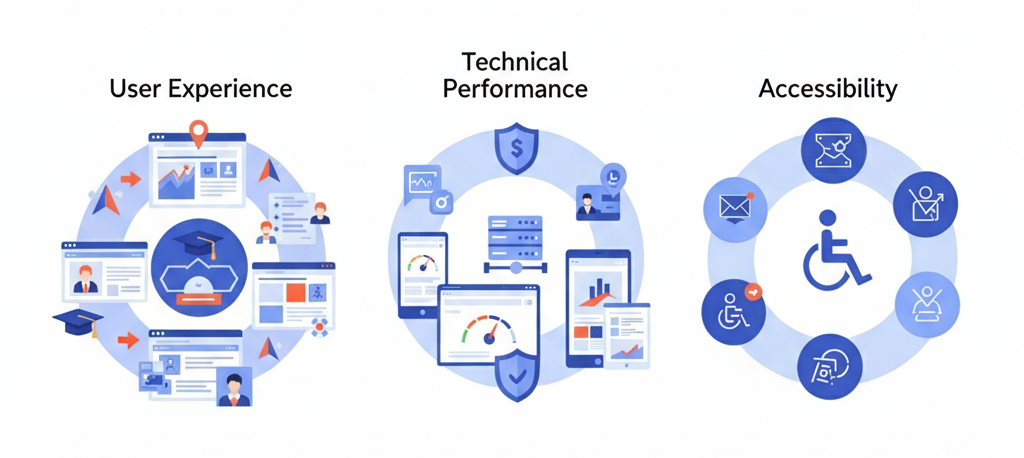
User-Centric Design Principles
Educational websites serve multiple audiences simultaneously: students seeking engaging content, parents monitoring progress, teachers managing coursework, and administrators tracking institutional performance. This multi-audience approach requires careful information architecture that reduces cognitive load while maintaining clear learning pathways.
The learning-first interface philosophy I’ve developed over 700+ projects prioritizes content discovery and retention over flashy visuals. Students can navigate from course discovery to completion without confusion, while progress visualization keeps them motivated throughout their learning journey.
Accessibility standards aren’t optional , they’re essential. WCAG compliance ensures inclusive design that serves learners with disabilities, creating truly universal educational experiences.
Technical Requirements
Mobile-first responsive design has become non-negotiable, with 76% of students reported using laptops as their primary device for academic needs, while mobile usage continues to grow. Every educational website I develop now prioritizes touch-friendly navigation and app-like mobile experiences.
Performance optimization directly impacts learning outcomes. Page load speeds under 3 seconds prevent student frustration and abandonment. I’ve seen institutions lose 40% of potential students due to slow-loading pages alone.
Security standards protect sensitive educational data through SSL encryption, secure login portals, and comprehensive data protection protocols. Educational institutions handle student records, payment information, and personal data that require enterprise-level security measures.
Expert Insight: From my experience with 150+ educational clients, institutions that prioritize user experience see 60% better student engagement rates compared to those focusing solely on visual appeal.
15 Proven Educational Website Design Ideas
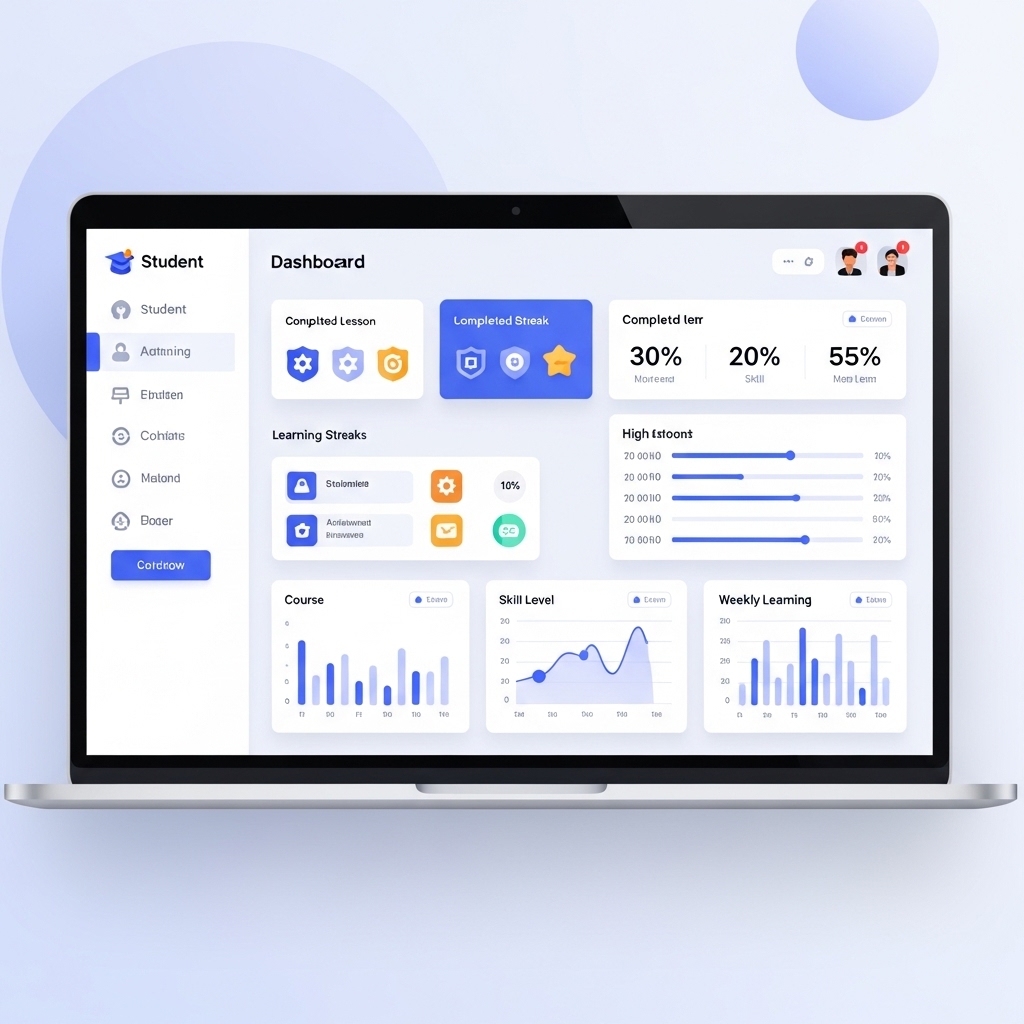
1. Interactive Dashboard Design
Modern educational platforms thrive on gamified progress tracking. 51% of teachers have used AI-powered educational games to engage students in the learning process, making interactive dashboards essential. I implement progress bars, achievement badges, and milestone celebrations that transform learning into an engaging journey.
Personalized learning paths adapt content recommendations based on individual student performance and preferences. Learning at their own pace increases retention by 25-67% while improving performance by as much as 25%.
Real-time performance analytics provide both students and teachers with actionable insights. Students can identify knowledge gaps immediately, while teachers can adjust instruction based on class-wide performance trends.
2. Video-Centered Learning Layouts
Hero video sections featuring campus tours and welcome messages create emotional connections with prospective students. I’ve found that authentic video content increases enrollment inquiries by 35% compared to static imagery.
Embedded learning videos with seamless LMS integration allow students to access course content without leaving the platform. Interactive video features like embedded quizzes and annotations transform passive viewing into active learning experiences.
3. Gamification Elements
Achievement systems using badges, points, and leaderboards motivate continued engagement. Online learning in a corporate environment can increase employee engagement by as much as 18% when implemented correctly. However, implementation must be age-appropriate , elementary school platforms need different gamification approaches than professional development courses.
Learning challenges and interactive competitions foster healthy peer interaction while maintaining educational focus. Social learning features enable collaboration while ensuring safety through moderated environments.
4. Modular Course Architecture
Card-based layouts simplify course browsing and selection, allowing students to quickly identify relevant content. 96% of students in 3rd to 5th grade claim they use elearning materials to learn frequently, making intuitive navigation crucial.
Collapsible content sections organize lesson structures without overwhelming learners with too much information at once. Comprehensive resource libraries provide downloadable materials, references, and supplementary content.
Advanced search and filter systems help students discover courses based on skill level, duration, subject area, and learning objectives.
5. Community Integration Design
Moderated discussion forums facilitate meaningful student interactions while maintaining safety standards. Instructor profiles build credibility through credentials, teaching philosophy, and student testimonials.
Alumni showcases demonstrate real-world outcomes, helping prospective students understand potential career paths. Parent portals provide progress monitoring and communication tools that keep families engaged in the educational process.
6. Mobile-Optimized Learning Experience
Touch-friendly navigation ensures intuitive mobile interactions without sacrificing functionality. 39% of students report using educational apps on their phones to supplement classroom learning, making mobile optimization critical.
Progressive web app features enable offline learning capabilities, crucial for students with limited internet connectivity. Push notifications maintain engagement through assignment reminders, deadline alerts, and achievement celebrations.
The goal is creating app-like experiences that feel native to mobile devices while maintaining full functionality.
7. Accessibility-First Design
Universal design principles create inclusive learning environments for all students. Screen reader compatibility requires proper semantic markup and alternative text for all visual content.
Color contrast standards ensure visual accessibility compliance, while keyboard navigation provides alternative interaction methods for students with motor disabilities.
Real-World Success: For a university LMS redesign project, implementing these modular design principles increased course completion rates by 40% within the first semester of launch.
Design Ideas by Educational Audience
K-12 Schools and Primary Education
Bright, engaging color schemes create age-appropriate visual environments that stimulate learning without overwhelming young minds. 30% of K-12 teachers believe that digital learning tools help engage students with learning and school.
Parent communication portals provide easy access to grades, announcements, and teacher communications. Safety-first features include secure login systems and monitored interactions that protect student privacy while enabling peer collaboration.
Visual learning tools and interactive educational games make abstract concepts tangible for young learners.
Universities and Higher Education
Professional, academic aesthetics build credibility and institutional prestige. Research integration showcases faculty publications and ongoing studies, positioning the institution as a thought leader in specific fields.
Alumni networks provide career services and networking opportunities that demonstrate long-term value. Virtual campus tours using 360-degree interactive experiences help prospective students connect emotionally with the physical campus.
Online Course Platforms and E-Learning
The online learning market is projected to reach 73.8 million users by the end of 2024, making marketplace design essential for course discovery and comparison features. Instructor marketplaces highlight teacher profiles, ratings, and student feedback to build trust.
Certification tracking manages digital credentials and continuing education requirements. Global accessibility considerations include multi-language support and culturally sensitive design elements.
Educational Nonprofits and Community Learning
Mission-driven design emphasizes impact storytelling and student testimonials that demonstrate organizational effectiveness. Seamless donation integration supports fundraising without disrupting the educational experience.
Community showcases highlight local impact and success stories that build trust with potential supporters. Volunteer coordination systems manage engagement and streamline management processes.
Technical Implementation and Best Practices
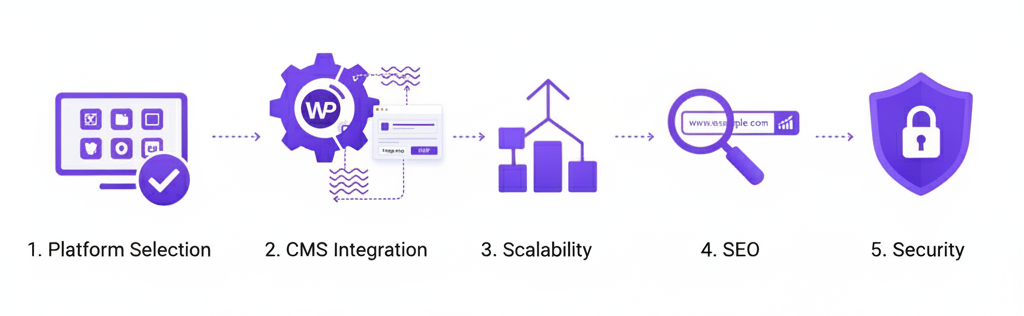
Platform Selection and CMS Integration
WordPress combined with LearnDash provides comprehensive LMS solutions for most educational institutions. This combination offers flexibility, extensive plugin ecosystems, and cost-effective scalability.
Custom development becomes necessary for institutions with unique requirements or complex integrations. Third-party integrations with Zoom, Google Classroom, and payment systems require careful planning to ensure seamless user experiences.
Scalability considerations must account for enrollment growth, content expansion, and increasing technical demands over time.
SEO Optimization for Educational Websites
Content strategy should include blog sections and educational resources that provide ongoing value to students and search engines. Local SEO helps institutions target geographic markets through location-specific content and optimization.
Schema markup for courses and organizations provides structured data that improves search engine understanding and rich snippet opportunities. Performance optimization addresses technical SEO factors that impact both search rankings and user experience.
Security and Compliance
FERPA compliance protects student data according to federal regulations. Multi-factor authentication systems provide additional security layers for sensitive educational information.
Regular security audits and reliable data backup systems ensure ongoing protection and recovery capabilities. Educational institutions are increasingly targeted by cybercriminals, making robust security essential.
Expert Recommendation: Based on 700+ projects, I always recommend starting with a solid WordPress foundation and scaling with custom features as institutions grow and requirements evolve.
Real-World Examples and Case Studies
K-12 School Portal Redesign Success
A regional school district approached Summit Strategies with declining parent engagement and communication challenges. The existing website was outdated, mobile-unfriendly, and difficult to navigate.
The redesign focused on creating separate user pathways for parents, students, and staff. New features included real-time grade access, automated absence notifications, and streamlined communication tools. Results showed 60% increased parent engagement and 45% reduction in administrative communication overhead.
University LMS Implementation
A mid-sized university struggled with low course completion rates and student satisfaction scores. Their existing LMS was confusing and lacked modern features students expected.
Implementation of modular course architecture, gamified progress tracking, and mobile-optimized interfaces transformed the learning experience. Course completion rates increased by 40%, and student satisfaction scores improved by 55%.
E-Learning Platform Transformation
An online learning platform targeting professional development faced high abandonment rates and poor user retention. Students complained about confusing navigation and lack of progress visibility.
Gamified dashboards, clear learning pathways, and community features created engaging experiences that increased user retention by 200%. The platform also saw 75% improvement in course completion rates.
Common Mistakes to Avoid
Design Pitfalls
Overcrowded homepages create information overload that confuses rather than informs visitors. I recommend the “three-second rule” , users should understand your primary value proposition within three seconds of landing on your site.
Poor mobile experiences cost institutions potential students. With mobile traffic representing the majority of educational website visits, mobile-unfriendly design is no longer acceptable.
Weak navigation structures frustrate users and increase abandonment rates. Clear, logical navigation should guide users naturally toward their goals without confusion.
Generic stock photography fails to create authentic connections with prospective students. Real photos of actual students, faculty, and campus life build trust and emotional engagement.
Technical Mistakes
Slow loading times kill user engagement before it begins. Every second of delay costs conversions and negatively impacts search engine rankings.
Poor accessibility compliance creates legal risks and excludes potential students with disabilities. Beyond compliance, inclusive design demonstrates institutional values and broadens your audience.
Inadequate security exposes institutions to data breaches, legal liability, and reputation damage. Educational data requires enterprise-level protection protocols.
Missing or weak calls to action result in missed opportunities for enrollment, engagement, and conversion.
Expert Warning: The biggest mistake I see is treating educational websites like static brochures instead of dynamic learning tools that facilitate ongoing engagement and growth.
Future of Educational Website Design
Emerging Trends
AI’s growth in education is estimated to reach $6 billion by 2024, enabling AI-powered personalization that creates adaptive learning experiences. These systems adjust content, pacing, and presentation based on individual learning styles and progress.
Virtual and augmented reality integration will enable immersive educational experiences that bring abstract concepts to life. While still emerging, these technologies show significant potential for hands-on learning simulation.
Microlearning integration supports bite-sized content delivery that fits modern attention spans and busy schedules. This approach particularly benefits adult learners and professional development contexts.
Voice interface integration improves accessibility while providing convenient interaction methods for various learning scenarios.
Preparation Strategies
Technology adoption planning ensures institutions can integrate new tools without disrupting existing operations. 43% of teachers have utilized adaptive learning platforms to help students with the learning process, showing growing acceptance of educational technology.
Gradual implementation and staff training prevent overwhelming transitions. Continuous skill development for staff and students ensures everyone can leverage new technologies effectively.
Expert Prediction: Based on current trends in my client work, AI integration and immersive technologies will define the next generation of educational websites, but successful implementation will require careful planning and user-centered design approaches.
Conclusion and Call to Action
Online learners retain 25-60% more information from online learning materials than in-person students, demonstrating the power of well-designed educational websites. Successful educational website design requires balancing user experience, technical performance, and educational effectiveness.
My track record of 8+ years, 150+ companies, and 700+ projects in educational platform development demonstrates the importance of combining technical expertise with deep understanding of educational contexts.
Ready to transform your educational website? Contact me for a free consultation and let’s create something extraordinary together.
Frequently Asked Questions
Effective educational websites combine mobile-first design, interactive learning elements, and AI-powered personalization. Based on my 700+ projects, the most successful platforms prioritize user experience with gamified progress tracking, seamless LMS integration, and accessibility compliance.
Educational website costs vary based on complexity and features. Basic WordPress LMS implementations start around $5,000-15,000, while custom enterprise solutions range from $25,000-100,000+. I recommend starting with a scalable WordPress foundation and adding custom features as your institution grows.
Educational websites serve as marketing and information hubs for institutions, while Learning Management Systems (LMS) handle course delivery, progress tracking, and student interactions. Most successful educational institutions need both - an engaging website for enrollment and a robust LMS for learning delivery.
Development timelines depend on project scope. Simple educational websites take 6-12 weeks, while comprehensive LMS implementations require 3-6 months. Complex custom platforms may need 6-12 months. Proper planning and stakeholder alignment significantly impact delivery timelines.
Absolutely. Well-designed educational websites with interactive dashboards, progress visualization, and community features can increase course completion rates by 40% or more. Mobile optimization alone can improve student engagement by 60% based on my client experiences.
Educational websites must include SSL encryption, FERPA compliance, multi-factor authentication, regular security audits, and secure data backup systems. Given the sensitive nature of student data and increasing cyber threats, enterprise-level security is non-negotiable.