When Charlotte White, lead educator at Visionary Labs, began integrating digital tools into her classroom, she faced the same issue most teachers do: too many resources, not enough clarity. By carefully selecting just three educational websites that aligned with her goals, she reduced lesson prep time by 45% while doubling student participation. This transformation highlights the power of choosing the right tools rather than using every tool available.
Modern educators face unprecedented challenges in delivering engaging, effective instruction while managing increasing administrative demands. The digital revolution in education has created both opportunities and overwhelming choices. With thousands of educational websites claiming to revolutionize teaching, how do you identify the platforms that truly make a difference?
As a CMS Web Designer and Developer with over 8 years of experience in educational platform development, having delivered 700+ projects for institutions worldwide, I’ve witnessed firsthand how the right digital tools can transform teaching effectiveness. The key isn’t adopting every new platform, it’s strategically selecting educational websites for teachers that align with specific classroom needs and learning objectives.
This comprehensive guide explores the most effective teacher resources online and digital tools for teachers, categorized by practical use-cases. By the end, you’ll know exactly which platforms to implement, how to integrate them seamlessly, and how to measure their impact on student outcomes.
Why Educational Websites Are Essential for Modern Teachers
The Digital Teaching Revolution
The shift toward digital education isn’t just a trend, it’s become essential infrastructure for modern classrooms. About 60% of educators using digital planning tools adopted them during the pandemic, and daily usage of digital instructional materials has jumped from 28% prior to the pandemic’s onset to 52% today, according to EY research.
This transformation addresses critical challenges teachers face:
- Limited preparation time
- Diverse learning needs
- Demand for engaging, interactive content
Traditional resource limitations, outdated textbooks, insufficient materials, and one-size-fits-all approaches, no longer meet today’s educational standards. The K-12 EdTech segment led the market with the largest revenue share of 39.40% in 2024, according to Grand View Research, highlighting the significant investment in educational technology solutions.
Core Benefits for Educators
Lesson Planning Efficiency
Quality classroom technology platforms can reduce preparation time by 40-60%. Instead of creating materials from scratch, teachers access professionally developed, standards-aligned resources that can be customized for specific classroom needs.
Enhanced Student Engagement
Interactive digital tools boost student participation dramatically. In a 2024 survey, 92% of teachers noted that technology has had a positive impact on their student engagement, according to STEM Sports research. Gamified learning platforms, multimedia content, and real-time assessment tools transform passive learning into active engagement.
Professional Growth
Free educational websites for educators provide ongoing professional development opportunities. From teaching strategy videos to peer collaboration forums, these platforms support continuous learning without additional costs or time constraints.
Cost-Effectiveness
While premium platforms offer advanced features, many essential tools remain free. This democratization of educational technology ensures that budget constraints don’t limit access to high-quality teaching resources.
Data-Driven Insights
Modern educational platforms provide analytics that help teachers understand student progress, identify learning gaps, and adjust instruction accordingly. This evidence-based approach replaces guesswork with actionable insights.
Expert Insight
“After building over 50 educational platforms for schools in the Gulf and USA, I’ve seen that the real game-changer is aligning tools with teacher needs, not just following trends. The most successful implementations start small, focus on specific problems, and scale gradually based on measurable results.” – JS Josim, Educational Technology Expert
Charlotte White’s experience at Visionary Labs perfectly illustrates this approach. Rather than overwhelming her workflow with multiple platforms, she strategically implemented one core tool that improved not just student outcomes but also strengthened teacher-parent communication and administrative efficiency.
Top Educational Websites for Teachers by Category
1. Comprehensive Teaching Resource Platforms
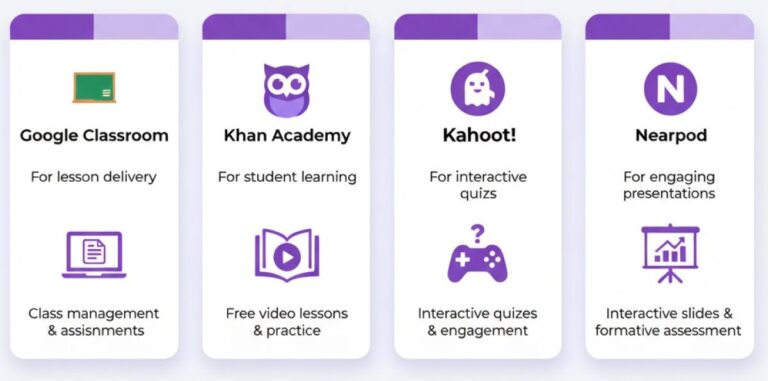
Google Classroom
Google Classroom stands as the foundation of digital classroom management. This free platform seamlessly integrates:
- Assignment distribution
- Grade tracking
- Parent communication
- Real-time collaboration tools
- Comprehensive grade books
Teachers can distribute materials instantly, provide feedback directly on student work, and maintain organized class communications. Recent updates include enhanced AI-powered grading assistance and improved accessibility features.
The platform excels in K-12 environments already using Google services, offering automatic integration with Google Docs, Sheets, and Drive. However, schools using different ecosystems may find the transition challenging.
Khan Academy
Khan Academy revolutionizes personalized learning with its extensive library covering mathematics, science, history, and economics. The platform’s strength lies in adaptive learning algorithms that adjust content difficulty based on individual student progress.
Key Features:
- Detailed teacher dashboards
- Student progress tracking
- Video-based instruction
- Interactive exercises
- AI tutoring integration
Recent AI tutoring integration provides students with immediate, personalized feedback, making it particularly valuable for supporting struggling learners and challenging advanced students simultaneously.
PBS LearningMedia
PBS LearningMedia offers standards-aligned multimedia content that brings curriculum to life through:
- High-quality educational videos
- Interactive games
- Comprehensive lesson plans
- Climate education modules
- Social justice curricula
The platform’s strength is its research-backed content development and clear curriculum alignment, making lesson planning more efficient and effective.
2. Lesson Planning & Curriculum Development
Teachers Pay Teachers
This marketplace has transformed how educators share and access teaching materials. With over 4 million resources created by teachers for teachers, the platform offers:
- Daily lesson plans
- Comprehensive unit studies
- Quality control through teacher ratings
- Free and premium resources
- Income opportunities for educators
Success stories include teachers who’ve dramatically reduced preparation time while improving student engagement through professionally designed activities and assessments.
BetterLesson
BetterLesson provides comprehensive lesson plans integrated with professional development opportunities. The platform features:
- Curriculum mapping tools
- Standards-aligned instruction
- Peer-reviewed lesson plans
- Personalized coaching (premium)
- Implementation guides
The platform particularly benefits new teachers seeking structured support and experienced educators looking to refine their practice.
CommonLit
Focused specifically on reading comprehension, CommonLit offers:
- Differentiated texts
- Integrated assessment tools
- Appropriate reading levels
- Progress tracking capabilities
- Literacy-focused instruction support
The assessment integration allows teachers to track reading growth and identify specific comprehension challenges, making it invaluable for literacy-focused instruction.
3. Classroom Management & Student Engagement
ClassDojo
ClassDojo transforms classroom management through:
- Positive behavior tracking
- Enhanced parent communication
- Digital portfolios
- Student engagement analytics
- Gamification elements
The platform’s digital portfolio features allow students to showcase their learning while parents stay connected to daily classroom activities.
Nearpod
Nearpod excels in creating interactive presentations with:
- Real-time polling and quizzes
- Multimedia integration
- VR/AR capabilities
- Virtual field trips
- 3D scientific models
Different pricing tiers accommodate various budget levels, with free versions offering substantial functionality for most classroom needs. Teachers report significant increases in student participation when using Nearpod’s interactive features.
Kahoot!
This game-based learning platform makes assessment engaging through:
- Competitive quizzes
- Interactive activities
- Device accessibility
- Analytics insights
- Custom content creation
The platform’s analytics provide insights into student understanding while the competitive element maintains high engagement levels.
Charlotte White's Success Story
Charlotte White’s implementation at Visionary Labs demonstrates the power of strategic platform combination. She introduced Nearpod during science lessons, resulting in a 60% jump in class participation within two months. Students began leading discussions themselves, transforming the classroom dynamic from teacher-centered to student-driven learning.
By strategically combining Kahoot! quizzes with Google Classroom assignment distribution, she created a fully interactive learning cycle that maintained student engagement while providing comprehensive assessment data.
4. Professional Development Platforms
Edutopia
Edutopia provides research-based teaching strategies through:
- Video resources and case studies
- Active community forums
- Practical research applications
- Immediate implementation strategies
- Peer collaboration opportunities
The community aspect allows educators to share experiences and learn from peers facing similar challenges.
Coursera for Teachers
Coursera offers university-level courses specifically designed for educators, featuring:
- Teaching methodology certifications
- Subject-specific training
- Flexible scheduling
- University partnerships
- Continuing education credits
Partnerships with leading universities ensure high-quality content that meets continuing education requirements in many states.
EdX Education
Through partnerships with MIT, Harvard, and other prestigious institutions, EdX provides:
- Micro-credentials and certificates
- Career advancement opportunities
- Free and premium options
- High-quality professional development
- Flexible learning paths
Subject-Specific Educational Websites
STEM Education
NASA for Educators
NASA’s educational resources bring space science into the classroom through:
- Standards-aligned lesson plans
- Virtual field trips
- Interactive simulations
- STEM career exploration
- Real-world applications
The platform’s strength lies in making complex scientific concepts accessible through engaging multimedia content.
Code.org
Code.org democratizes computer science education through:
- Free curriculum resources
- Teacher training workshops
- “Hour of Code” activities
- No-programming-background support
- Advanced high school courses
Recent expansions include integration guides for incorporating coding into other subjects.
PhET Interactive Simulations
These research-backed physics and chemistry simulations:
- Make abstract concepts tangible
- Provide interactive visualizations
- Allow variable manipulation
- Offer real-time results
- Bridge theory-practice gaps
Case Study: At Visionary Labs, Charlotte White paired PhET simulations with Google Classroom assignments, resulting in 40% higher comprehension scores among students who previously struggled with abstract physics concepts.
Language Arts & Literature
ReadWriteThink
This platform provides:
- Comprehensive reading and writing lesson plans
- Interactive tools and games
- Assessment rubrics
- Research-based literacy instruction
- Progress evaluation standards
Grammarly for Education
Grammarly’s educational tools offer:
- Real-time writing improvement
- Detailed explanations
- LMS integration
- Common writing challenge insights
- Independent improvement support
Social Studies & History
Smithsonian Learning Lab
Features include:
- Historical artifacts and documents
- Multimedia lesson resources
- Primary source materials
- Custom collection creation
- Professional development resources
National Geographic Education
Combines geography instruction with:
- World cultures exploration
- Environmental science
- Explorer classroom connections
- Global perspective development
- Cultural understanding enhancement
Arts & Creativity
Canva for Education
Democratizes graphic design through:
- Student-friendly design tools
- Presentation templates
- Collaborative project features
- Digital literacy skill development
- Professional-quality outputs
ArtsEdge (Kennedy Center)
Provides arts integration with:
- Performance and visual arts lesson plans
- Core academic subject connections
- Professional artist connections
- Real-world expertise access
- Creative learning opportunities
How to Choose the Right Educational Websites
Evaluation Criteria
Content Quality and Curriculum Alignment
The most important factor is ensuring platform content aligns with your specific curriculum standards and learning objectives. Look for:
- Explicit state and national standards connections
- Evidence-based instructional design
- Peer-reviewed content
- Regular content updates
- Quality assurance processes
User Experience and Interface Design
Platforms should be intuitive for both teachers and students. Consider:
- Navigation simplicity
- Clear instructions
- Mobile compatibility
- Accessibility features
- Loading speed
Technical Requirements
Consider your school’s technology infrastructure:
- Internet bandwidth requirements
- Device compatibility
- Operating system support
- Browser requirements
- Offline capabilities
Support and Training
Essential elements include:
- Multiple support channels
- Comprehensive documentation
- Training resources
- User communities
- Response times
Privacy and Data Protection
Ensure platforms comply with:
- FERPA regulations
- COPPA requirements
- State privacy laws
- Data encryption standards
- Transparent privacy policies
Implementation Strategy
Start Small
Begin with free platforms to evaluate effectiveness before investing in premium features. This approach allows you to:
- Test platform integration
- Assess teaching style compatibility
- Evaluate student response
- Measure learning outcomes
- Build confidence
Gradual Integration
Avoid overwhelming yourself and students by:
- Implementing one platform at a time
- Mastering basic features first
- Adding complexity gradually
- Monitoring user adoption
- Adjusting based on feedback
Training and Support
Successful implementation requires:
- Adequate training time
- Ongoing support systems
- Tech-savvy colleague identification
- Professional development planning
- Student and parent communication
Expert Recommendation Framework
“Based on my experience developing educational platforms for 150+ companies, I recommend starting with 2-3 core platforms that complement each other rather than trying to use everything at once. Focus on addressing specific pain points: if lesson planning takes too much time, start with resource platforms like Teachers Pay Teachers. If student engagement is the issue, begin with interactive tools like Kahoot! or Nearpod.”
Charlotte White’s experience at Visionary Labs perfectly illustrates this principle. She began with only two tools, Khan Academy for differentiated math instruction and ClassDojo for classroom management. This focused approach prevented teacher overwhelm while keeping students engaged with familiar tools.
This phased implementation allowed her to measure the impact of each tool separately, building confidence and administrative support before expanding her digital toolkit.
Implementation Tips & Best Practices
Getting Started
Audit Current Methods
Before adding new tools, assess your current challenges:
- Time spent on lesson planning
- Student engagement levels
- Differentiated instruction needs
- Assessment efficiency
- Communication effectiveness
Identify Pain Points
Target platforms that address your most pressing challenges first. This focused approach:
- Ensures immediate value
- Builds implementation momentum
- Demonstrates clear benefits
- Supports budget justification
- Encourages continued use
Pilot Programs
Test new platforms with select classes to:
- Refine implementation strategies
- Identify potential issues
- Gather user feedback
- Measure effectiveness
- Build success stories
Measure Outcomes
Establish baseline metrics and track:
- Student engagement changes
- Learning outcome improvements
- Time savings achieved
- User satisfaction levels
- Administrative efficiency gains
Maximizing Effectiveness
Blend Approaches
Technology should enhance, not replace, effective traditional methods. Successful implementations:
- Combine digital and traditional tools
- Maintain proven pedagogical approaches
- Support diverse learning styles
- Preserve human connections
- Balance screen time appropriately
Stay Current
Technology evolves rapidly, requiring:
- Regular feature updates
- Ongoing training participation
- User community engagement
- Best practice sharing
- Continuous skill development
Gather Feedback
Regularly collect input from:
- Students about platform experiences
- Parents about communication effectiveness
- Colleagues about implementation strategies
- Administrators about outcomes
- Technical support about optimizations
Common Pitfalls to Avoid
Technology Over-reliance
Ensure each digital tool serves a specific educational purpose rather than using technology for its own sake. Maintain focus on:
- Learning objectives alignment
- Educational value assessment
- Balanced instruction approaches
- Student needs prioritization
- Meaningful integration
Privacy Neglect
Address privacy concerns through:
- Policy review and understanding
- Digital citizenship instruction
- Clear usage guidelines
- Data sharing limitations
- Regular privacy audits
Inadequate Preparation
Prevent frustration and abandonment by:
- Thorough platform exploration
- Adequate training investment
- Support system establishment
- Implementation timeline planning
- Contingency preparation
Inflexibility
Be prepared to modify or abandon platforms that don’t serve students effectively:
- Regular effectiveness assessment
- User feedback incorporation
- Alternative solution exploration
- Adaptation willingness
- Student-centered decision making
Charlotte White’s success at Visionary Labs came from running a careful 3-month pilot program before full implementation. By tracking engagement metrics, student feedback, and her own time savings, she built a compelling case that convinced administrators to invest in premium platform licenses. This data-driven approach demonstrated clear return on investment and secured ongoing support for her digital initiatives.
Future of Educational Websites
Emerging Trends
AI-Powered Personalized Learning
Artificial intelligence is revolutionizing education by providing truly personalized learning experiences. AI tutors can:
- Adapt content difficulty in real-time
- Identify learning gaps instantly
- Provide customized support
- Analyze learning patterns
- Predict student needs
Virtual and Augmented Reality
VR and AR technologies are making abstract concepts tangible:
- Virtual field trips to historical sites
- 3D molecular structure manipulation
- Immersive presentation practice
- Real-world simulation experiences
- Enhanced visual learning opportunities
Advanced Analytics
Sophisticated analytics platforms provide deeper insights:
- Learning pattern identification
- Optimal study time determination
- Intervention timing optimization
- Personalized pathway recommendations
- Comprehensive progress tracking
Emerging Trends
Continuous Development
The rapid pace of educational technology evolution requires:
- Regular skill updates
- Platform exploration
- Best practice learning
- Innovation awareness
- Adaptation readiness
Digital Literacy Focus
Students need explicit instruction in:
- Digital citizenship principles
- Online safety practices
- Effective technology use
- Information evaluation skills
- Ethical technology behavior
Conclusion & Call-to-Action
Educational websites have transformed from nice-to-have supplements into essential tools for effective teaching. They save precious preparation time, engage students in ways traditional methods cannot, and provide data-driven insights that improve instructional decisions.
Charlotte White’s journey at Visionary Labs demonstrates that success comes not from using every available tool, but from strategically selecting platforms that address specific classroom needs. Her 45% reduction in prep time and doubled student participation resulted from careful platform selection and gradual, thoughtful implementation.
Key Success Principles:
- Start small with focused solutions
- Address specific problems systematically
- Provide adequate training and support
- Measure results to guide decisions
- Scale gradually based on success
Whether you begin with free platforms like Google Classroom and Khan Academy or invest in premium solutions like Nearpod and BetterLesson, the most important step is getting started.
Ready to transform your teaching with custom educational platforms? As an expert in educational technology development with over 8 years of experience creating successful platforms for 150+ companies worldwide, I can help you design and implement tailored LMS and digital education solutions that meet your specific needs.
Contact JS Josim’s agency today for personalized consultation on educational website development, custom learning management systems, and comprehensive digital transformation strategies that drive real results for teachers and students alike.
Frequently Asked Questions
Google Classroom, Khan Academy, PBS LearningMedia, and Edutopia offer comprehensive free resources that cover most essential teaching needs. These platforms provide lesson planning tools, student engagement features, and professional development resources without subscription costs.
In a 2024 survey, 92% of teachers noted that technology has had a positive impact on their student engagement. Platforms like Kahoot! and Nearpod transform passive learning into active participation through games, polls, and interactive presentations.
Reputable platforms comply with FERPA and COPPA regulations, ensuring student privacy protection. Always review privacy policies carefully, understand data collection practices, and establish clear guidelines for student use. Look for platforms with strong encryption, limited data collection, and transparent privacy practices.
Teachers report 40-60% reduction in lesson planning time when using quality educational platforms. Pre-made resources, automated grading features, and streamlined communication tools significantly reduce administrative tasks, allowing more time for instruction and student interaction.
Key factors include curriculum alignment, user-friendly interface, reliable technical support, strong privacy protections, and evidence of educational effectiveness. Start with free platforms to test compatibility with your teaching style and student needs before investing in premium features.