Most websites focus on on-page fixes but ignore the off-page signals Google values most. You’ve optimized your title tags, crafted perfect meta descriptions, and structured your content flawlessly, yet your rankings remain stagnant. The missing piece? External authority signals that tell Google your site deserves to rank.
Even the most perfectly optimized content struggles to compete without strong off-page authority. Recent 2025 research reveals that 95% of all pages have zero backlinks, while 1 ranking results have an average of 3.8 times more backlinks than positions 2-10. When other authoritative websites link to yours, mention your brand, and engage with your content, you’re building the trust signals that elevate rankings.
This comprehensive guide breaks down 22 essential off-page SEO factors that directly impact your search visibility. You’ll discover proven strategies for building high-quality backlinks, establishing domain authority, generating brand mentions, and creating the external signals Google rewards most.
We’ll cover four critical areas: link building strategies that actually work, authority signals that boost credibility, engagement metrics that drive visibility, and reputation boosters that establish trust. By implementing these off-page SEO factors systematically, you’ll build the external foundation your site needs to compete in 2025’s search landscape.
What Are Off-Page SEO Factors?
Off-page SEO factors are external signals that strengthen your domain authority and establish trust with search engines. Unlike on-page optimization, which you control directly through your website’s content and structure, off-page factors depend on how other websites, users, and platforms interact with your brand online.
These external signals serve as votes of confidence in your site’s credibility and relevance. When authoritative websites link to your content, mention your brand, or share your resources, they’re essentially recommending you to both users and search engines. Google interprets these signals as indicators of trustworthiness and expertise within your industry.
Off-Page vs On-Page SEO Comparison
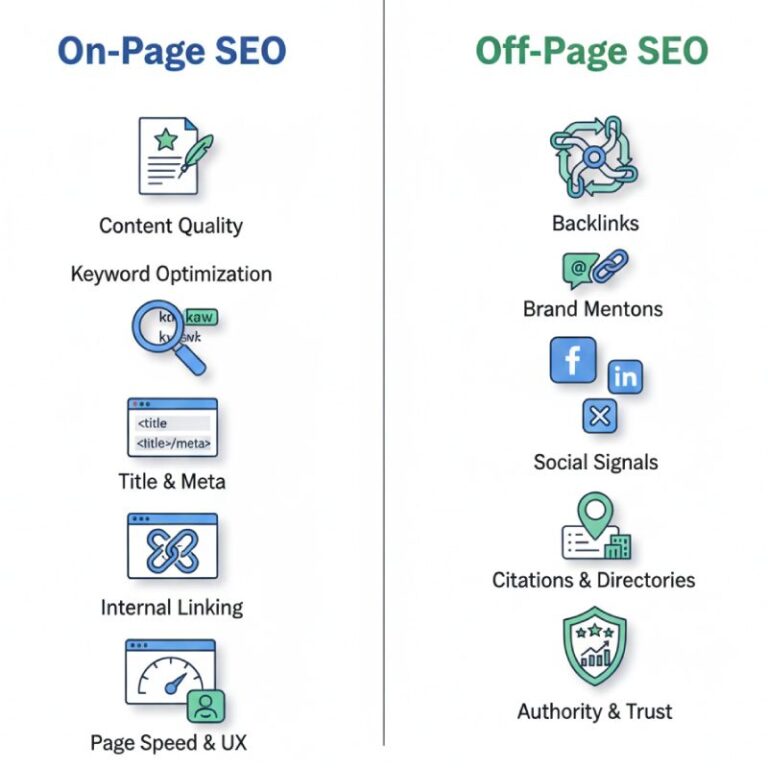
Factor | On-Page SEO | Off-Page SEO |
Control | Direct control | Indirect influence |
Location | Within your website | External websites/platforms |
Examples | Title tags, content, site speed | Backlinks, brand mentions, reviews |
Timeline | Immediate implementation | Long-term relationship building |
Measurement | Technical audits, rankings | Domain authority, referral traffic |
Dependencies | Internal resources | Third-party cooperation |
Google’s EEAT (Experience, Expertise, Authoritativeness, Trustworthiness) framework relies heavily on external validation. While you can demonstrate expertise through your content, true authority comes from recognition by peers, industry publications, and other credible sources. According to 2024 studies, 65.4% of SEOs believe domain authority is more important than the number of links when it comes to search rankings. Off-page SEO factors provide the external proof that validates your on-page claims.
The modern search algorithm evaluates hundreds of off-page signals, from the quality of websites linking to you to the sentiment of brand mentions across the web. Recent 2025 data shows that over 66% of pages have zero backlinks pointing to them, while long-form content receives 77.2% more backlinks than short articles. These factors work together to establish your site’s position in what Google calls the “web of trust”, a complex network of relationships that determines ranking potential.
Understanding off-page SEO means recognizing that your website exists within a broader ecosystem. Success requires building genuine relationships, creating valuable resources others want to reference, and establishing your brand as a trusted authority in your field. Let’s explore how each of the 22 critical factors contributes to this ecosystem.
The 22 Most Important Off-Page SEO Factors
Group 1: Core Link-Based Factors
1. High-Quality Backlinks
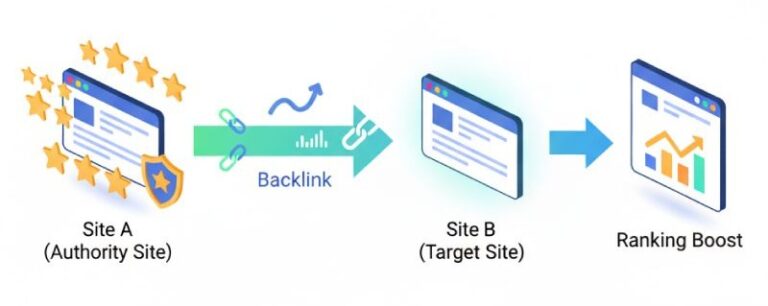
High-quality backlinks remain the cornerstone of off-page SEO success. These are links from authoritative, relevant websites that point to your content as a valuable resource. Quality trumps quantity, one link from a respected industry publication carries more weight than dozens from low-authority directories. Current 2025 research confirms that the number of domains linking to a page has the highest correlation to Google rankings.
Focus on earning links from sites with strong domain authority, relevant content, and engaged audiences. The linking page should be contextually related to your content, and the link should appear naturally within the content flow rather than in footers or sidebars.
2. Referring Domain Diversity
Search engines value backlink diversity across different domains. Having 100 links from one website is less valuable than having 20 links from 20 different authoritative domains. This diversity signals broader industry recognition and reduces dependence on any single source.
Build relationships with various types of websites: industry blogs, news publications, educational institutions, and complementary businesses. Each unique referring domain adds credibility and demonstrates your content’s widespread appeal. Consider how topical relevance impacts the value of each referring domain.
3. Anchor Text Distribution
Anchor text, the clickable text in hyperlinks, should vary naturally across your backlink profile. Over-optimization with exact-match keywords appears manipulative and can trigger penalties. Aim for a mix of branded anchors, partial matches, and natural phrases.
A healthy anchor text distribution includes your brand name (40-50%), generic terms like “click here” (20-30%), partial keyword matches (15-25%), and exact keyword matches (5-10%). This natural variation mirrors how people organically link to content.
4. Dofollow vs Nofollow Balance
While do-follow links pass direct ranking power, no-follow links still provide value through traffic, brand exposure, and natural link profile diversity. A completely do-follow backlink profile appears unnatural, as organic linking includes both types.
Maintain a healthy balance with approximately 80-85% dofollow and 15-20% nofollow links. High-authority nofollow links from platforms like Wikipedia, major news sites, or social media can still drive significant traffic and brand awareness.
5. Topical Relevance of Links
Links from topically relevant websites carry more weight than those from unrelated sources. Google’s algorithm considers the subject matter of linking sites when evaluating link value. A link from a fitness blog to your nutrition website is more valuable than one from a random tech blog.
Build relationships within your industry ecosystem. Target websites, blogs, and publications that serve your audience and cover related topics. This relevance signals to search engines that your content belongs in specific subject categories.
Group 2: Authority & Brand Signals
6. Brand Mentions (Linked & Unlinked)
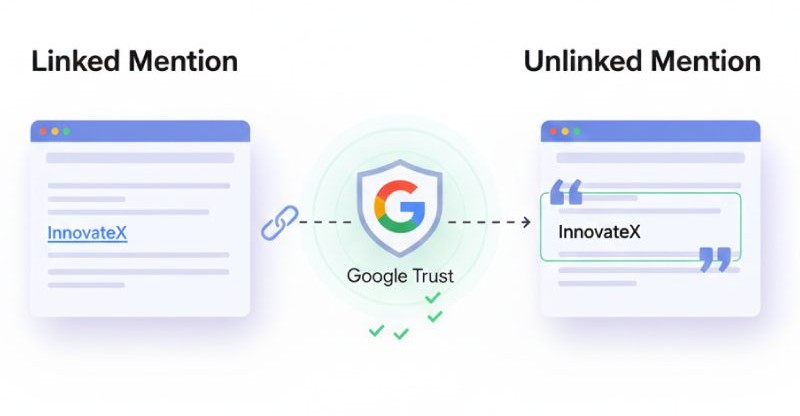
Brand mentions without links still contribute to your off-page SEO profile. When reputable sources mention your company name, products, or executives, they’re building brand authority even without direct links. Google’s algorithm can identify and value these unlinked mentions, as confirmed by 2024 research showing that brand signals significantly influence search rankings.
Monitor brand mentions across the web using tools like Google Alerts, Mention, or Brand24. Engage with positive mentions to build relationships and consider reaching out to unlinked mentions to request links when appropriate. These mentions work synergistically with your social media shares to build comprehensive brand authority.
7. Domain Authority / Domain Rating Growth
Domain authority metrics from Moz (DA) or Ahrefs (DR) serve as proxies for your site’s overall link profile strength. While not direct ranking factors, they correlate strongly with search performance and provide benchmarks for competitive analysis.
Focus on consistent, sustainable growth rather than rapid spikes that might indicate manipulative tactics. Track your domain authority quarterly and compare it to competitors to gauge your off-page SEO progress.
8. Citation Flow & Trust Flow
Majestic’s Citation Flow and Trust Flow metrics evaluate both the quantity and quality of your backlink profile. Citation Flow measures link volume, while Trust Flow assesses the quality of linking domains based on their proximity to trusted seed sites.
Aim for balanced growth in both metrics, with Trust Flow ideally staying within 10-15 points of Citation Flow. A significant gap might indicate low-quality link building that needs addressing.
9. PR Mentions & Media Coverage
Traditional media coverage and press mentions provide powerful authority signals. When journalists and media outlets reference your company, products, or expertise, they’re validating your industry standing to both readers and search engines.
Develop relationships with industry journalists and bloggers. Create newsworthy content, offer expert commentary on industry trends, and respond promptly to media requests. Tools like HARO (Help A Reporter Out) connect you with journalists seeking expert sources.
10. Influencer Endorsements
Endorsements from industry influencers, whether through social media mentions, blog features, or collaborative content, build brand authority and drive targeted traffic. These endorsements often lead to additional backlinks and brand mentions.
Identify relevant influencers in your industry and engage authentically with their content. Offer value before seeking endorsements, share their content, provide helpful comments, and build genuine relationships that naturally lead to mentions.
Group 3: Engagement & Social Signals
11. Social Media Shares & Virality
While social signals aren’t direct ranking factors according to Google’s 2024 statements, content that generates significant social sharing often attracts backlinks and brand mentions. Recent 2025 research indicates that social signals influence search rankings by amplifying visibility, attracting backlinks, and increasing branded search volume that reinforces authority and topical relevance.
Create shareable content that resonates with your audience’s interests and emotions. Use compelling visuals, controversial takes, or valuable insights that encourage sharing across social platforms. This social engagement often leads to the high-quality backlinks and brand mentions that do directly impact rankings.
12. YouTube & Video SEO Signals
YouTube, owned by Google, provides unique off-page SEO opportunities. Videos can rank in both YouTube and Google search results, and video content often attracts links and mentions from other content creators.
Optimize your video titles, descriptions, and thumbnails for search. Create video content that other creators might reference or embed, building your authority in video search results.
13. Podcast Mentions & Guest Appearances
Podcast appearances position you as an industry expert while often generating website traffic and potential backlinks. Many podcast hosts include guest links in show notes, providing valuable referral traffic and authority signals.
Research relevant podcasts in your industry and pitch valuable topics you can discuss. Prepare engaging talking points and resources that podcast audiences will find valuable.
14. Forum & Community Contributions
Active participation in industry forums, Reddit communities, and professional groups builds your reputation and can drive targeted traffic. While most forum links are nofollow, the brand exposure and traffic can be valuable.
Focus on providing genuine value rather than promotional content. Answer questions, share insights, and build relationships within communities where your target audience gathers.
15. Content Syndication
Syndicating your content on relevant platforms increases its reach and can attract backlinks from readers who discover it through syndication channels. Choose syndication partners that reach your target audience and allow linking back to your original content.
Popular syndication platforms include Medium, LinkedIn Publishing, and industry-specific content networks. Always include canonical tags or clear attribution to your original content to avoid duplicate content issues.
Group 4: Local & Reputation Factors
16. Local Citations (NAP Consistency)
For local businesses, consistent Name, Address, and Phone (NAP) information across directories and citations is crucial. These citations act as local off-page SEO signals that improve local search visibility and build trust with search engines.
Audit your current citations for consistency and claim/update major directory listings like Google My Business, Yelp, Yellow Pages, and industry-specific directories. Inconsistent information confuses search engines and users.
17. Online Reviews & Ratings
Customer reviews on Google, Yelp, and industry-specific platforms serve as trust signals that influence both search rankings and user behavior. Positive reviews improve local search visibility and click-through rates from search results.
Implement a review management strategy that encourages satisfied customers to leave reviews while addressing negative feedback professionally. Respond to all reviews to show active engagement with customer feedback.
18. Business Directory Links
Quality business directories provide valuable local citations and potential referral traffic. Focus on established directories with good domain authority and relevance to your industry or location.
Beyond general directories like Yellow Pages, seek out industry-specific directories, local chamber of commerce listings, and professional association directories that serve your target market.
19. Community Involvement & Sponsorships
Local community involvement and sponsorships often generate high-quality local backlinks while building brand recognition. Local newspapers, event websites, and community organizations frequently link to sponsors and participants.
Sponsor local events, participate in community initiatives, and support local causes that align with your brand values. These activities naturally generate local links and positive brand associations.
Group 5: Advanced Off-Page Strategies
20. Broken Link Building
Broken link building involves finding broken outbound links on relevant websites and suggesting your content as a replacement. This provides value to website owners while earning you high-quality backlinks. According to 2024 Ahrefs data, 66.5% of links across the web become dead within nine years, creating abundant opportunities for this strategy.
Use tools like Ahrefs or Screaming Frog to identify broken links on target websites. Create content that matches or improves upon the original linked resource, then reach out with a helpful suggestion. This technique works particularly well when combined with skyscraper technique approaches.
21. Skyscraper Technique
The evolved Skyscraper Technique involves finding high-performing content in your industry, creating something significantly better, then reaching out to sites linking to the original content. Success requires substantial improvement, not minor updates. Recent 2024 data shows that 36.3% of SEO experts focus on building link assets through high-quality articles and original research.
Research top-performing content using tools like BuzzSumo or Ahrefs. Identify gaps, add new insights, improve design, or provide more comprehensive coverage. Your improved version should offer clear, substantial value over the original. This connects directly with creating interactive assets that naturally attract ongoing links.
22. Interactive Assets & Tools
Interactive content like calculators, assessments, quizzes, and tools naturally attract backlinks because they provide unique value that other sites want to reference. These assets often generate ongoing link acquisition with minimal additional effort.
Develop tools that solve common problems in your industry. A mortgage calculator, ROI assessment tool, or interactive checklist can become a linkable asset that continues attracting backlinks over time.
Measuring Off-Page SEO Success
Tracking off-page SEO progress requires monitoring multiple metrics that indicate growing external authority and trust. Unlike on-page metrics that show immediate changes, off-page SEO results develop over months and quarters, making consistent tracking essential.
Key Performance Indicators (KPIs)
Domain authority growth serves as your primary off-page SEO health indicator. Track your DA/DR scores monthly and compare them to competitors in your space. Based on 2025 industry benchmarks, healthy domain authority growth ranges from 5-15 points annually, depending on your starting position and link building intensity.
Backlink acquisition metrics include total backlinks, referring domains, and the quality distribution of new links. Monitor both quantity and quality, 100 new backlinks mean little if they’re all low-quality. Focus on steady growth in referring domains from relevant, authoritative sources, remembering that referring domain diversity often matters more than raw numbers.
Brand mention volume and sentiment tracking reveals your growing industry recognition. Use tools like Mention, Brand24, or Google Alerts to monitor both linked and unlinked mentions. Increasing mention volume, especially from authoritative sources, indicates growing brand authority that supports your overall SEO strategy.
Referral traffic from backlinks demonstrates the real-world value of your off-page efforts. High-quality backlinks should drive qualified traffic that engages with your content. Monitor referral traffic sources in Google Analytics to identify your most valuable link partnerships and understand which off-page SEO factors generate the best user engagement.
Essential Tools for Off-Page SEO Tracking
Google Search Console provides free backlink data directly from Google, showing which sites link to yours and which pages receive the most external links. While not comprehensive, it offers reliable data for tracking link acquisition trends.
Ahrefs excels at comprehensive backlink analysis, competitor research, and broken link identification. Its Site Explorer shows detailed backlink profiles, including anchor text distribution, referring domain quality, and link acquisition timelines.
SEMrush offers robust backlink tracking plus brand monitoring capabilities. Its Brand Monitoring tool tracks mentions across the web, while the Backlink Analytics feature provides competitive intelligence on competitor link strategies.
Moz Pro combines backlink analysis with local SEO tracking, making it valuable for businesses with local components. Its Link Explorer provides spam score assessments and link opportunity identification.
Dashboard Creation and Reporting
Create monthly dashboards tracking domain authority changes, new backlink acquisition, brand mention volume, and referral traffic trends. Quarterly reports should include competitive analysis, showing how your off-page metrics compare to industry leaders.
Set realistic benchmarks based on your industry and starting position. A new website might target 2-3 new referring domains monthly, while established sites might aim for 10-20. Adjust expectations based on your content creation capacity and outreach resources. Remember that sustainable growth beats aggressive tactics that risk penalties.
Common Off-Page SEO Mistakes to Avoid
Buying Low-Quality Backlinks
The temptation to purchase quick backlinks from cheap providers leads to algorithmic penalties and wasted resources. Google’s algorithm easily identifies link schemes, private blog networks, and other manipulative tactics that violate search guidelines.
Focus on earning links through valuable content, relationship building, and legitimate outreach. While this approach requires more time and effort, it builds sustainable authority that withstands algorithm updates.
Over-Optimized Anchor Text
Excessive use of exact-match keyword anchors in your backlink profile appears unnatural and can trigger penalties. Google expects diverse, natural anchor text that reflects how people organically link to content.
Maintain anchor text diversity by encouraging natural linking patterns. When conducting outreach, suggest varied anchor text options or allow linking sites to choose their own anchor text for more natural distribution.
Ignoring Link Relevance
Pursuing backlinks from irrelevant, high-authority sites provides minimal SEO value compared to relevant, moderate-authority sources. Topical relevance significantly impacts link value in modern search algorithms.
Prioritize relevance over raw authority metrics. A link from a mid-tier industry blog often provides more value than one from a high-authority site in an unrelated niche.
Weak Brand Monitoring
Failing to monitor brand mentions means missing opportunities to convert unlinked mentions into backlinks while potentially missing negative coverage that needs addressing.
Implement comprehensive brand monitoring using multiple tools and manual searches. Regularly check for new mentions and engage appropriately with both positive and negative coverage.
Inconsistent Citation Management
Inconsistent NAP information across directories confuses search engines and users while weakening local SEO efforts. Regular citation audits ensure your business information remains accurate across all platforms.
Conduct quarterly citation audits using tools like Moz Local or BrightLocal to identify and correct inconsistencies. Update information promptly when business details change.
30-Day Off-Page SEO Implementation Roadmap
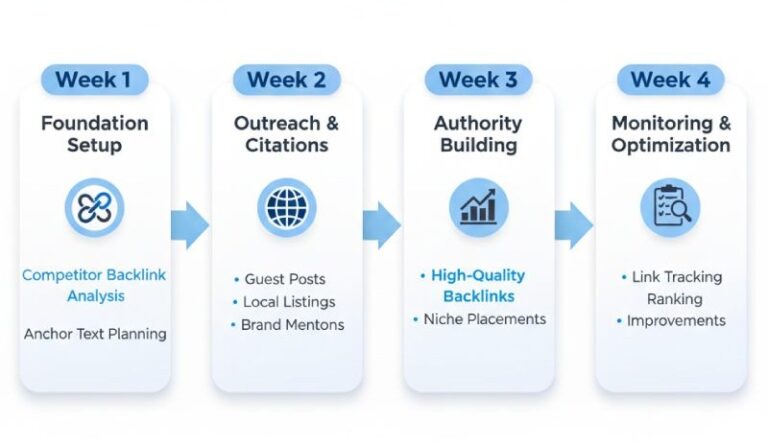
Week 1: Audit & Competitor Analysis
Begin with a comprehensive audit of your current off-page SEO status. Export your backlink profile from Google Search Console and analyze it using Ahrefs or SEMrush. Identify your strongest linking domains, most linked content, and anchor text distribution patterns.
Conduct competitor analysis on 3-5 direct competitors. Examine their backlink profiles to identify potential link opportunities, successful content formats, and gaps in their strategies. Note which domains link to multiple competitors but not to you, these represent immediate outreach targets.
Set up brand monitoring alerts using Google Alerts, Mention, or Brand24. Create alerts for your brand name, key executives, and important product names to capture both linked and unlinked mentions moving forward.
Week 2: Foundation Building
Claim and optimize your Google My Business profile and other major directory listings. Ensure NAP consistency across all platforms and add compelling descriptions, photos, and relevant business categories.
Create or update your social media profiles on platforms where your audience is active. While social signals don’t directly impact rankings, these profiles often rank in branded searches and provide platforms for content distribution.
Audit your existing content to identify pieces with strong link acquisition potential. Look for comprehensive guides, original research, or unique insights that could attract backlinks with proper promotion.
Week 3: Outreach & Content Creation
Launch your first outreach campaigns targeting the opportunities identified in Week 1. Focus on broken link building, resource page additions, and relevant unlinked mentions. Personalize each outreach email and clearly explain the value you’re providing.
Create one high-value linkable asset, this could be an industry study, comprehensive guide, interactive tool, or original research. Ensure this content provides unique value that other sites would want to reference.
Begin relationship building with industry influencers, journalists, and complementary businesses. Engage authentically with their content and look for opportunities to provide value before requesting anything.
Week 4: Tracking & Optimization
Set up comprehensive tracking systems including Google Analytics goal tracking for referral traffic, monthly backlink reports from your chosen SEO tool, and brand mention monitoring dashboards.
Analyze the results of your initial outreach campaigns. Identify which approaches generated the highest response rates and adjust your templates and targeting accordingly. Follow up on non-responses after 1-2 weeks with a different angle or additional value.
Plan your ongoing off-page SEO strategy based on what you learned during the 30-day sprint. Set monthly targets for new referring domains, content creation, and outreach volume based on your capacity and initial results.
Document successful outreach templates, link prospects, and relationship-building strategies for future use. Create systems that make your off-page SEO efforts scalable and sustainable long-term.
Conclusion & Next Steps
These 22 off-page SEO factors work together to build the external authority that modern search engines require for top rankings. While on-page optimization ensures your content is discoverable and relevant, off-page signals provide the trust and credibility that separate successful websites from their competitors.
The key takeaway is that quality and consistency win over shortcuts every time. Building sustainable off-page authority requires genuine relationship building, valuable content creation, and patience as your efforts compound over time. Manipulative tactics might provide short-term gains but inevitably lead to penalties and lost rankings.
Your action plan should follow a systematic approach: audit your current off-page status to understand your starting point, prioritize the factors most relevant to your industry and business model, execute consistently with sustainable practices that you can maintain long-term, and monitor progress regularly to adjust your strategy based on results.
Start with the fundamentals, claim your business listings, create linkable content, and begin building genuine relationships within your industry. As these foundations strengthen, expand into advanced strategies like interactive tools and sophisticated outreach campaigns. Remember that off-page SEO is a marathon, not a sprint, and sustainable success comes from building real authority that serves your audience’s needs.
Frequently Asked Questions
High-quality, relevant backlinks from authoritative websites remain the most critical off-page SEO factor. While other signals like brand mentions and social engagement contribute to overall authority, backlinks provide the clearest signal to search engines about your content's value and credibility. Focus on earning links from sites with strong domain authority that serve your target audience and cover related topics.
There's no magic number of backlinks that guarantees rankings. Quality matters far more than quantity, one link from a highly authoritative, relevant source can be worth more than dozens from low-quality directories. 2025 research shows that most successful websites continuously build backlinks over time, with established sites typically having hundreds or thousands of referring domains. Focus on consistent growth rather than hitting specific numbers, emphasizing referring domain diversity over raw backlink counts.
Social signals like shares, likes, and comments are not direct ranking factors according to Google. However, they indirectly support SEO by increasing content visibility, driving traffic, and often leading to backlinks when social content gets discovered by bloggers and journalists. Social engagement also indicates content quality and relevance, which can influence user behavior signals that do impact rankings.
Guest posting remains effective when done correctly, focusing on providing genuine value to the host site's audience rather than purely seeking backlinks. Successful guest posting involves writing high-quality, relevant content for reputable sites in your industry. Avoid guest post networks, low-quality sites, or over-optimized author bios that appear manipulative.
Yes, poor off-page SEO practices can result in manual penalties or algorithmic demotions. Common harmful activities include buying low-quality backlinks, participating in link schemes, over-optimizing anchor text, or building links from irrelevant or spammy websites. Focus on natural, sustainable link building practices that provide real value to users and website owners.
Off-page SEO results typically become visible within 3-6 months, though significant improvements may take 6-12 months or longer. The timeline depends on your starting authority, competition level, and the quality of your off-page efforts. Some impacts, like direct referral traffic from new backlinks, can be immediate, while ranking improvements develop gradually as search engines recognize your growing authority.