The B2B eCommerce Revolution
It’s 2015, and I’m sitting across from Bjorn, the owner of NordicGear Solutions, a small Danish outdoor equipment distributor. He’s frantically scribbling order details on paper napkins because his “digital strategy” consists of a Gmail account and a prayer.
Fast forward to today, and his business processes over €2.3 million in B2B orders annually through Shopify Plus. The napkin days are long gone.
Is Shopify good for B2B? After helping over 300 companies transition to digital B2B commerce (and witnessing more than a few spectacular failures), I can tell you the answer isn’t black and white. The global B2B eCommerce market reached $19.34 trillion in 2024 and is projected to hit $47.54 trillion by 2030 – that’s a staggering 16.17% annual growth rate.
The shift isn’t just about numbers. According to recent industry analysis, B2B ecommerce sales are projected to surpass $2.4 trillion in the US alone by 2024, while Shopify’s research shows that by 2025, 80% of all B2B sales are expected to occur online.
Modern B2B buyers expect Amazon-like experiences. They want to place orders at 2 AM, compare products instantly, and track shipments in real-time. Traditional B2B platforms often feel like using a flip phone in a smartphone world.
Shopify, originally designed for B2C businesses, has evolved into a surprisingly capable B2B platform. But here’s the catch it’s not perfect for everyone. I’ve seen companies thrive with Shopify B2B setups, and I’ve also seen expensive migrations that ended in tears (and emergency calls at midnight).
Take Leila’s story from UAE-based TechDistrib. She spent six months researching B2B platforms, nearly chose a complex enterprise solution, then launched on Shopify Plus in three weeks. Her first-year B2B revenue? $1.8 million.
The question isn’t whether Shopify can handle B2B. It can. The real question is whether it’s the right fit for your specific business needs, budget, and growth plans.
Understanding Shopify's B2B Capabilities
Here’s something most people don’t realize: Shopify didn’t wake up one day and decide to become a B2B platform. It evolved through customer demand and smart acquisitions.
When I started implementing B2B solutions on Shopify in 2018, we relied heavily on third-party apps. Today, Shopify offers native B2B functionality that rivals dedicated platforms.
Core B2B Features You Get Out of the Box:
- Company profiles and customer management – Create detailed buyer personas and purchasing hierarchies
- Custom pricing and catalogs – Set different prices for different customer tiers
- Bulk ordering and quantity breaks – Enable large-order discounts automatically
- Payment terms and credit limits – Offer net 30/60 payment options
- Tiered pricing structures – Volume-based pricing that scales with order size
Let me share a real example. Soren from Copenhagen-based MedSupply Denmark needed to serve both individual practitioners and large hospital networks. Different customers, different prices, different catalogs.
Using Shopify’s native B2B features, we created three customer tiers: Individual (retail pricing), Small Clinics (15% discount), and Enterprise (custom pricing). The setup took two weeks instead of the six months his previous developer had quoted for a custom solution.
Is Shopify Good for B2B
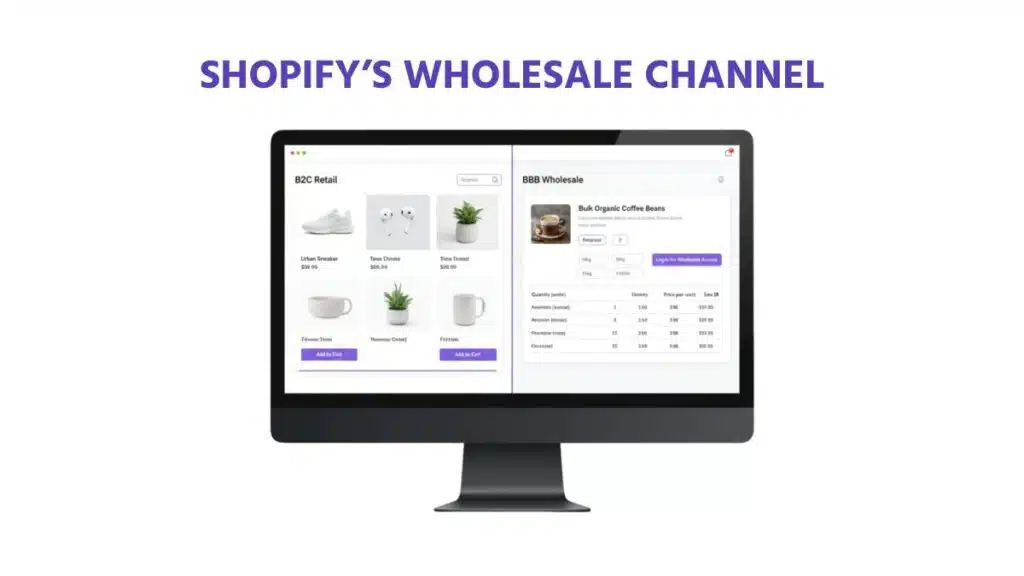
This is where things get interesting. Shopify’s wholesale channel creates a separate, password-protected storefront for B2B customers. It’s like having two stores in one – your regular customers shop the main store, while wholesalers access the B2B portal.
I remember implementing this for Arctic Innovations, a Finnish electronics distributor. Their B2B customers were accidentally stumbling into the retail store and getting confused by consumer-focused messaging. The wholesale channel solved this overnight.
Third-Party App Ecosystem
While native features cover basics, the real power lies in Shopify’s app ecosystem. Apps like Bold Commerce, SparkLayer, and Wholesale Club extend functionality dramatically. I’ve used combinations of 3-4 B2B apps to create enterprise-level functionality at a fraction of traditional B2B platform costs.
One Warning: App dependency can become expensive. I’ve seen monthly app costs reach $800+ for complex B2B setups. Factor this into your budget planning.
Shopify Plus for B2B: The Enterprise Solution
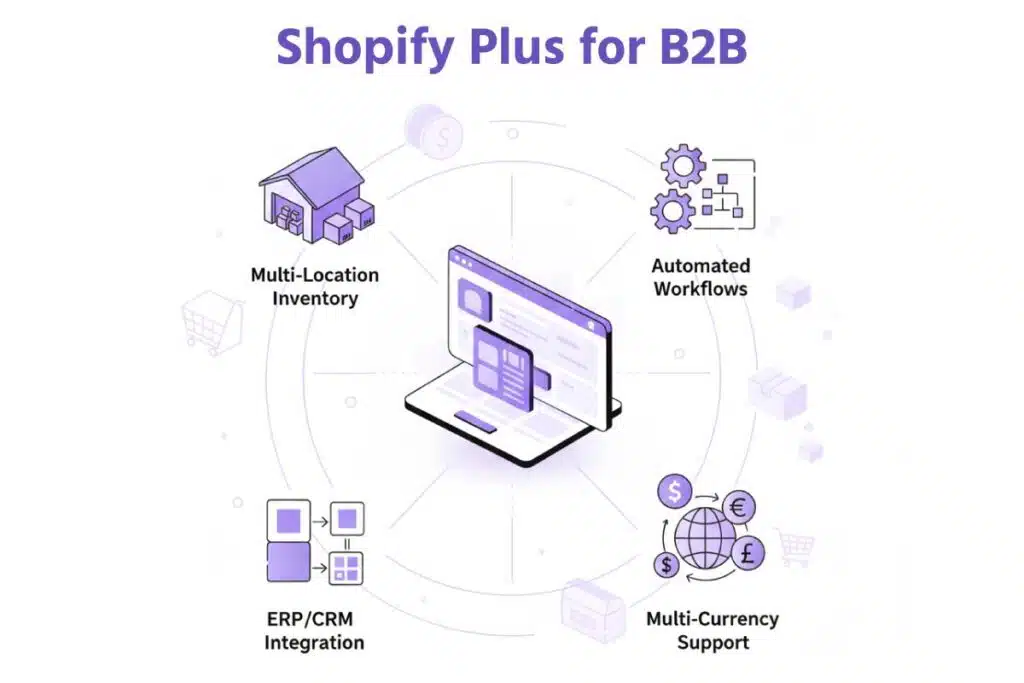
If regular Shopify is a Swiss Army knife, Shopify Plus is a professional toolkit. After implementing Plus for 50+ B2B businesses, I can confidently say it’s where Shopify truly shines for wholesale operations.
Why Shopify Plus Changes Everything
The jump from standard Shopify to Plus isn’t just about handling more traffic. It’s about unlocking enterprise-grade B2B capabilities that transform how you do business.
Here’s what happened with GulfTech Supplies, a Dubai-based industrial equipment distributor. They were processing $500K monthly on standard Shopify but hitting walls everywhere – inventory management, pricing complexity, integration limitations. Three months after upgrading to Plus, they scaled to $1.2M monthly revenue.
Who Should Choose Shopify for B2B?
Shopify is ideal for small to mid-sized B2B businesses, hybrid B2B-B2C brands, and companies that want fast setup without heavy IT, offering scalable features for wholesalers, manufacturers, and distributors while very large, highly complex enterprises may need alternative platforms.
Manufacturing and Wholesale Distribution
Shopify handles complex product variants, bulk pricing, and multi-location inventory well. I’ve implemented solutions for electronics, automotive parts, and industrial equipment distributors.
Fashion and Apparel B2B
The visual merchandising capabilities shine here. Size matrices, color variants, and seasonal catalogs work seamlessly. Copenhagen Fashion House uses Shopify to serve 200+ retail partners across Europe.
Food and Beverage Wholesale
Temperature-controlled shipping, expiration date tracking, and regulatory compliance are manageable with the right app combinations. Just ask GulfFresh, a UAE-based food distributor serving 150+ restaurants.
SEO and Marketing Benefits for B2B
Here’s something most B2B platform comparisons miss: Shopify’s marketing and SEO advantages can dramatically impact your bottom line. I’ve seen wholesale businesses double their organic leads within six months of migration.
Technical SEO Advantages That Drive B2B Results
B2B buyers research carefully, compare specs, and shop during off-hours, which Shopify’s mobile-first design supports well. After launching a Shopify B2B store, MedSupply Denmark saw a 280% rise in mobile traffic and 23% higher order values from mobile purchases.
Shopify vs. Competitors: B2B Platform Comparison
After implementing solutions on multiple B2B platforms, I can give you the real comparison – not the marketing fluff. Here’s how Shopify stacks against major competitors.
Shopify vs. Magento (Adobe Commerce)
This is the comparison I get asked about most. Both platforms can handle B2B, but they serve different business types.
Implementation Guide and Best Practices
Let me share the implementation approach that’s worked for 50+ successful B2B launches. This isn’t theory it’s battle tested methodology refined through plenty of mistakes (yes, including that time I accidentally deleted a client’s entire product catalog).
Step-by-Step Setup Process
Phase 1: Foundation Setup (Week 1)
Start with clean data architecture. I learned this lesson painfully with Arctic Innovations when we imported 5,000 products with inconsistent naming. Cleaning the mess took longer than the original setup.
Essential Steps:
• Configure customer groups and pricing tiers
• Set up product catalog structure with consistent naming
• Implement basic B2B-specific apps (I recommend starting with 2-3 maximum)
• Create wholesale storefront design and navigation
Phase 2: Integration and Testing (Week 2-3)
This is where most implementations fail. Don’t rush the integration testing. NordicGear’s inventory sync failed for three days because we skipped testing edge cases.
Critical Integrations:
• ERP/Accounting software connection
• Payment gateway configuration for B2B terms
• Shipping rule setup for bulk orders
• Customer login and registration workflows
Phase 3: Training and Launch (Week 4)
User training prevents 90% of post-launch issues. Create simple process documents with screenshots. Your warehouse team will thank you later.
Cost Analysis and ROI Considerations
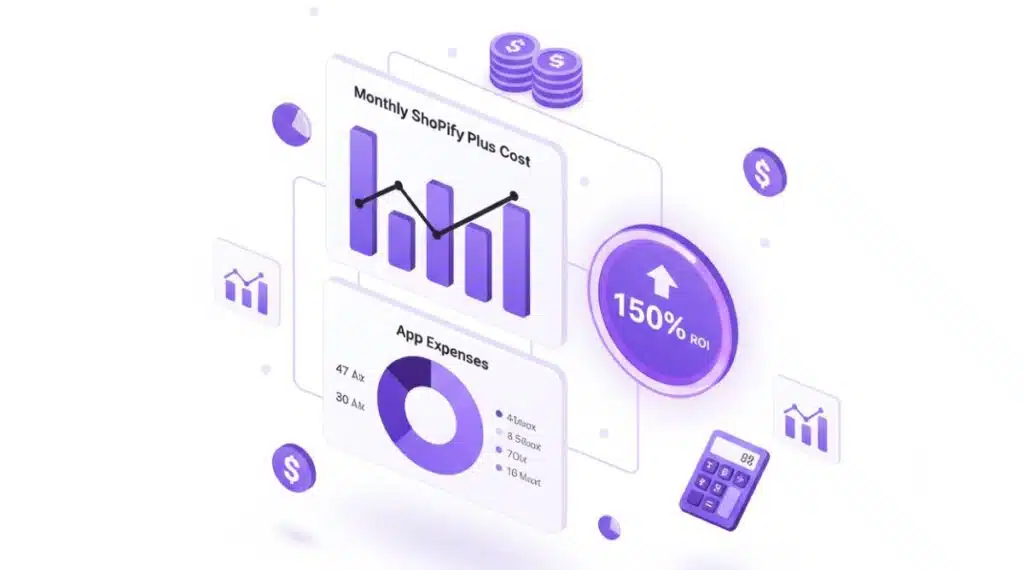
Let me give you the real numbers – not the sanitized case studies from marketing brochures. After analyzing costs for 50+ B2B implementations, here’s what you actually spend and what returns you can expect.
Detailed Cost Breakdown: The Reality Check
Shopify Plus B2B: True Monthly Costs
Most businesses underestimate total costs by 40-60%. Here’s the complete picture:
Base Costs:
• Shopify Plus: $2,000+ monthly (scales with revenue)
• Essential B2B apps: $300-800 monthly
• Payment processing: 2.4-2.6% per transaction
• Development/customization: $500-2,000 monthly (amortized)
Frequently Asked Questions
A: Yes, Shopify works excellently for 80% of B2B businesses, especially those with $100K-10 annual revenue. It offers native B2B features, wholesale channels, and enterprise capabilities through Shopify Plus.
A: Shopify provides company profiles, custom pricing tiers, bulk ordering, quantity breaks, wholesale storefronts, payment terms, and multi-location inventory management.
A: Standard Shopify with B2B apps costs $200-800 monthly. Shopify Plus for enterprise B2B starts at $2,000+ monthly plus apps and customization costs.
A: Yes, regular Shopify supports basic wholesale functionality through apps like Wholesale Club and customer tags, suitable for businesses under $100K monthly revenue.
A: Shopify Plus is worth it for B2B businesses processing $300K+ monthly revenue, needing advanced automation, multiple integrations, or serving international markets.