Soren from Copenhagen calls me at 2 PM on a Tuesday. His industrial valve company, NordicFlow Systems, isn’t getting leads despite having “a beautiful website.” After ten minutes on his site, I found the problem. Beautiful? Yes. Functional for B2B buyers? Not even close.
This story repeats itself weekly in my consultancy. I’ve learned one crucial truth: what makes a good B2B website isn’t what most people think.
Here’s the reality check: 71% of B2B research starts with search engines, and close to half of B2B professionals feel generating enough leads to meet their sales targets was a real challenge in 2024. Your website isn’t just a digital brochure anymore it’s your most important sales tool, working 24/7 to qualify leads, build trust, and guide prospects toward purchase decisions.
The stakes couldn’t be higher. Optimized web pages can lift conversion rates by 0.5% – 1% in just 6 months, while an ecommerce site that loads within a second converts 2.5x more visitors than a site that loads in 5 seconds. Poor websites? They’re silent killers, bleeding potential customers to competitors without you ever knowing.
But here’s what I’ve discovered after countless late-night troubleshooting sessions and victory celebrations with clients: building an effective B2B website follows a predictable pattern. There are specific elements that separate the winners from the also-rans.
This guide will walk you through every critical component. No fluff, no theory you can’t use. Just battle tested strategies from real-world B2B commerce victories.
Foundation Elements: Core Components of Effective B2B Websites
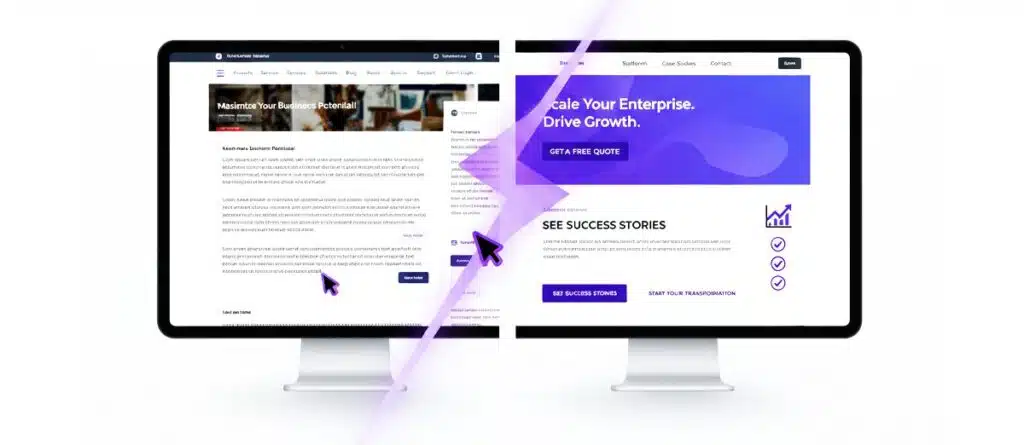
Let me start with a confession. Three years ago, I nearly lost a major client in Dubai because I got the foundations wrong. Rashid’s logistics company, GulfChain Solutions, had gorgeous visuals but zero buyer persona alignment. We spent $40,000 on a redesign that looked stunning but converted terribly.
That painful lesson taught me something invaluable: customer-centric design isn’t optional in B2B.
Customer-Centric Design Philosophy
Your website must speak directly to your ideal buyer’s pain points. Not your CEO’s vision. Not the designer’s artistic preferences. Your customer’s actual problems.
I always start projects with buyer persona workshops. For a Norwegian software company called FjordTech, we discovered their main buyers weren’t IT directors but operations managers stressed about efficiency. This single insight changed everything about their messaging and navigation.
The process is simple but crucial:
- Interview existing customers about their buying journey
- Map their pain points to your solutions
- Design user flows that match their decision-making process
- Test with real prospects, not internal stakeholders
Professional Visual Design & Brand Identity
Here’s where most B2B sites go wrong. They either look like they were built in 2010 or they’re so “creative” that you can’t figure out what the company actually does.
Take Leila’s manufacturing company in Abu Dhabi, SandStorm Engineering. Their original site had animated backgrounds and music. Impressive? Maybe. Professional? Definitely not for B2B buyers making six-figure purchase decisions.
Key design principles that convert:
- Clean, modern aesthetic with strategic white space utilization
- Consistent brand elements across every page and touchpoint
- Trust-building visual cues like professional photography and industry certifications
The sweet spot is sophisticated simplicity. Think Apple Store, not art gallery.
Technical Excellence: Performance & SEO Fundamentals
Nothing kills B2B conversions faster than a slow, broken website. I learned this the hard way with a German automotive supplier called PrecisionParts Bavarian. Their site took 12 seconds to load on mobile. Guess how many leads they were getting? Zero.
Mobile Responsiveness & Cross-Device Optimization
Here’s a statistic that will shock you: The average mobile web page takes 15.3 seconds to load, yet mobile research dominates B2B buying processes. Most B2B websites are still designed desktop-first with mobile as an afterthought.
I recently audited a site for Magnus, CEO of ArcticSteel Solutions in Helsinki. His desktop site looked professional. On mobile? Complete disaster. Forms were impossible to fill out, product specs were unreadable, and the contact information was hidden.
Essential mobile optimization includes:
- Responsive design that adapts flawlessly to any screen size
- Touch-friendly elements with proper spacing and sizing
- Simplified navigation that works with thumbs, not mouse pointers
Test your site on actual devices, not just browser tools. The difference is significant.
Page Speed & Core Web Vitals
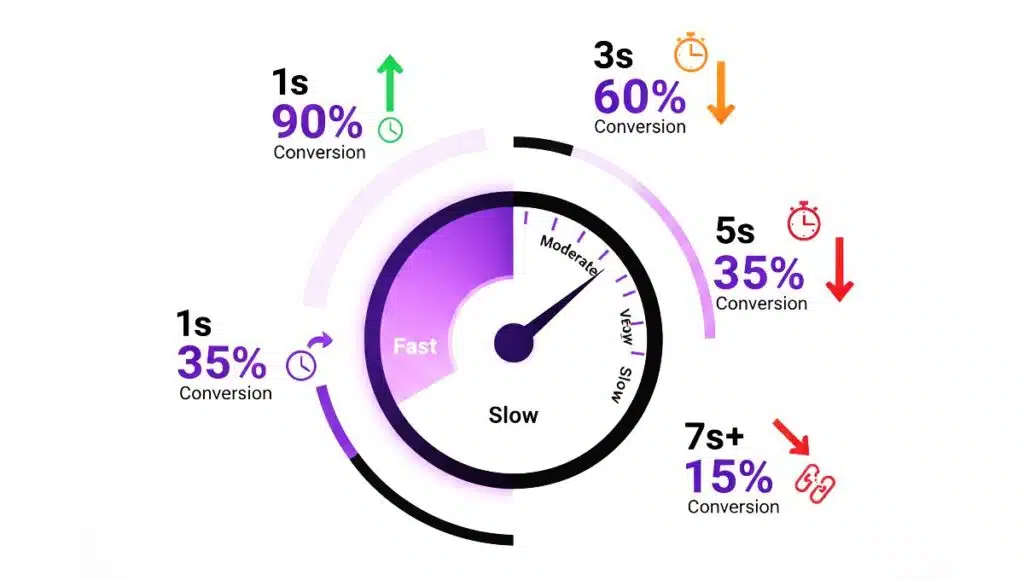
Website conversion rates drop by an average of 4.42% for each additional second of load time between 0 and 5 seconds. That’s not just an SEO factor it’s a conversion killer.
For TechFlow Industries in Zurich, we reduced page load time from 8 seconds to 2.3 seconds. The result? Lead generation increased by 180% in three months.
Fastest speed wins include:
- Image optimization using the WebP format and proper sizing
- Caching implementation for repeat visitors
- Code minification to reduce file sizes
- Content delivery networks for global speed consistency
Use Google PageSpeed Insights weekly. It’s free and brutally honest about your performance gaps.
Content Strategy: Building Authority Through Information
Content marketing in B2B isn’t about viral posts or clever memes. It’s about demonstrating expertise and building trust with decision-makers who need to justify expensive purchases to their boards.
Educational Content & Thought Leadership
The best B2B content answers questions your prospects are asking at 2 AM when they can’t sleep because of business problems you can solve.
Ingrid’s industrial equipment company, NorthStar Machinery in Stockholm, transformed their business with this approach. Instead of product brochures, they created detailed guides about equipment selection, maintenance protocols, and ROI calculations.
Their “Complete Guide to Industrial Conveyor Selection” now generates 300+ qualified leads monthly. Why? Because procurement managers bookmark it and share it with their teams.
High-converting B2B content formats:
- Problem-focused blog posts addressing real industry challenges
- Detailed whitepapers with actionable insights and data
- Case studies showing measurable results for similar companies
- Technical specifications and comparison guides
70% of B2B buyers report watching videos throughout their sales journey, making video content essential for complex product explanations.
User Experience & Navigation Excellence
User experience in B2B isn’t about making things pretty. It’s about removing friction from the path between problem awareness and purchase decision.
Strategic Navigation Design
Your navigation must reflect how buyers think, not how your company is organized. For CloudTech Solutions in Amsterdam, we restructured their navigation from company departments to buyer needs:
Instead of: Products | Services | About | Contact
We used: Reduce Costs | Improve Efficiency | Ensure Compliance | Get Started
The result? Time on site increased by 65% and conversion rates doubled.
Navigation best practices:
- Maximum 7 main menu items (human memory limitation)
- Clear, action-oriented labels that match buyer language
- Logical hierarchy guiding prospects through your sales funnel
Prominent search functionality for complex product catalogs
Conversion-Focused Design Elements
Every page should have a clear purpose and a logical next step. The average B2B lead conversion rate you need to consistently hit is around 2.4% for landing page success.
For ProcessMaster Engineering in Vienna, we implemented progressive disclosure:
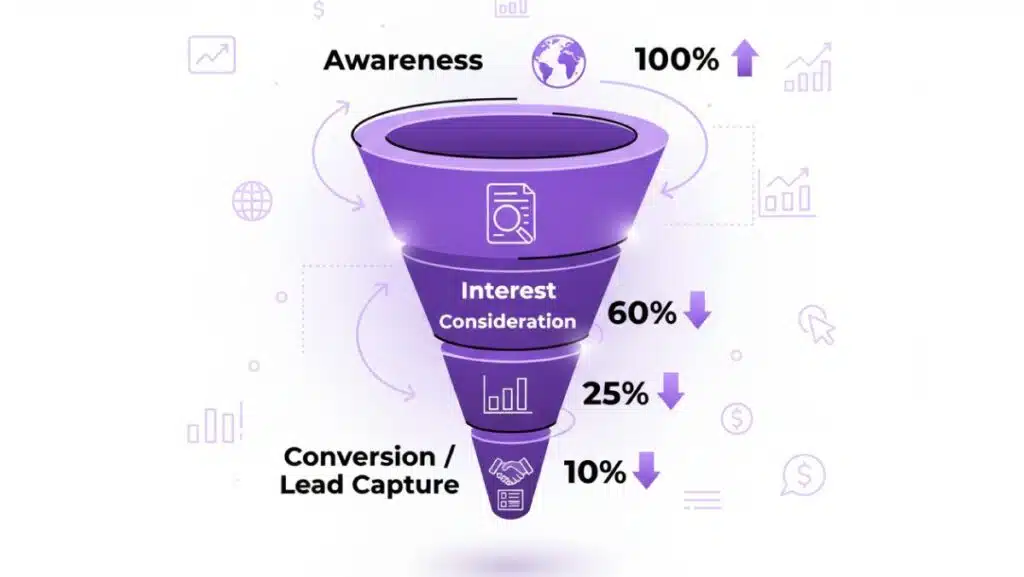
- Problem awareness (blog posts and guides)
- Solution evaluation (case studies and demos)
- Vendor selection (detailed specs and contact forms)
Critical conversion elements:
- Strategic CTA placement above the fold and after value propositions
- Multiple contact options for different communication preferences
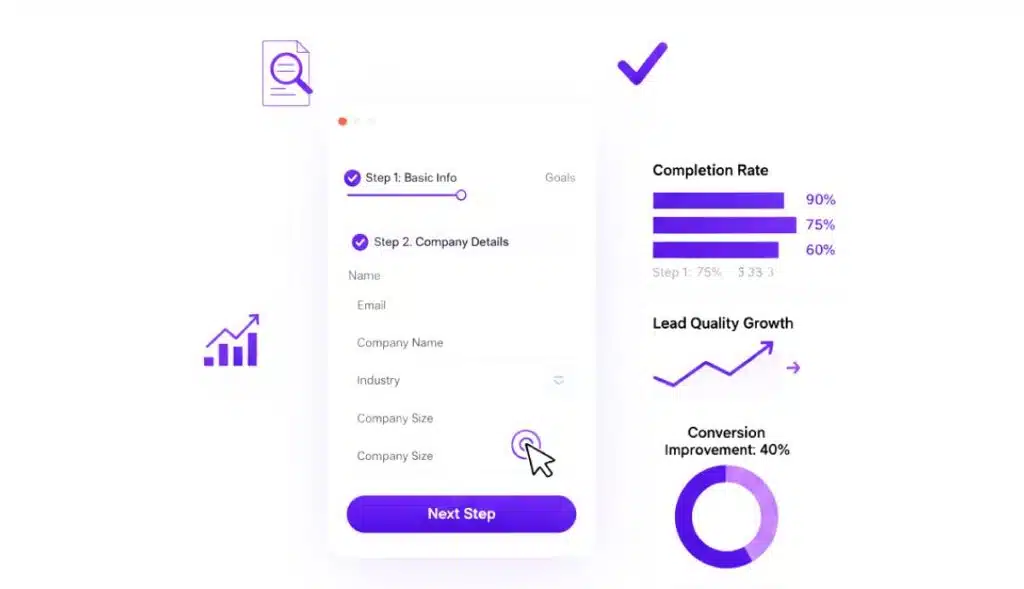
- Progressive profiling in forms to reduce friction
- Clear value exchanges for contact information
Trust & Credibility Builders
B2B purchases involve significant risk. Decision-makers need overwhelming evidence that you’re credible, capable, and committed to their success.
Security & Data Protection
Data breaches destroy B2B relationships instantly. Your website must demonstrate enterprise-level security practices.
Essential security elements:
- SSL certificates for all pages, not just checkout
- GDPR compliance with clear privacy policies
- Security badges from recognized authorities
- Regular security audits with documented protocols
After implementing these measures for TechSecure Systems in Riyadh, their enterprise deal closure rate increased by 45%.
Company Transparency & Team Showcase
B2B buyers want to know who they’re potentially working with. Anonymous companies feel risk in high-stakes purchasing decisions.
Your About page should include:
- Founder and leadership team profiles with relevant experience
- Company history and milestones demonstrating stability
- Office locations and contact information
- Core values that align with enterprise buyers’ expectations
For GreenEnergy Solutions in Copenhagen, adding detailed team profiles resulted in 30% more initial sales calls and higher qualification rates.
Conversion Optimization & Lead Generation
Converting B2B website visitors requires understanding complex, multi stakeholder decision making processes. B2B buyers have become more cautious, and the time it takes to convert a lead into a sale is getting longer.
Strategic CTA Implementation
B2B CTAs must match the visitor’s stage in the buyer’s journey. Someone researching solutions needs different next steps than someone ready to evaluate vendors.
For IndustrialTech Partners in Munich, we created stage-specific CTAs:
- Awareness stage: “Download Industry Report”
- Consideration stage: “Schedule Demo”
- Decision stage: “Get Custom Quote”
This approach increased conversion rates by 85% across all touchpoints.
Lead Capture & Form Optimization
68% of B2B companies use personalized landing pages to generate leads via paid marketing efforts. Your forms must balance information gathering with user experience.
For LogisticsPro Solutions in Dubai, we implemented three step progressive profiling:
- Initial contact: Name, email, company
- Interest qualification: Specific needs and timeline
- Sales qualification: Budget and decision-making process
This reduced form abandonment by 60% while improving lead quality significantly.
Analytics & Continuous Improvement
Data-driven optimization separates high-performing B2B websites from expensive failures. Without proper measurement, you’re flying blind.
Performance Tracking & KPI Monitoring
B2B analytics require different metrics than B2C. Vanity metrics like page views mean nothing if you’re not generating qualified leads and closed deals.
Critical B2B metrics include:
- Lead generation rate by traffic source and campaign
- Lead quality scores based on ideal customer profiles
- Sales cycle length from first visit to closed deal
- Customer acquisition cost across all marketing channels
- Conversion rates at each buyer journey stage
For ManufacturingTech Solutions in Hamburg, implementing proper attribution tracking revealed that their blog content contributed to 40% of enterprise deals, despite appearing to have low direct conversion rates.
Testing & Optimization Strategies
Continuous improvement isn’t optional in competitive B2B markets. Small optimization gains compound into significant business advantages.
My testing framework includes:
- A/B testing major page elements and CTAs
- User session recordings to identify friction points
- Heatmap analysis to understand user behavior patterns
- Regular user feedback through surveys and interviews
Remember: optimization never ends. Market conditions change, buyer preferences evolve, and competitive landscapes shift continuously.
Conclusion
After ten years and 300+ B2B website projects, I’ve learned that what makes a good B2B website isn’t mysterious or complex. It’s about understanding your buyers deeply and removing every possible barrier between their problems and your solutions.
The fundamentals never change: customer centric design, technical excellence, valuable content, intuitive user experience, credible trust signals, optimized conversions, and continuous improvement.
Frequently Asked Questions
The five critical elements are customer-centric design aligned with buyer personas, fast technical performance with mobile optimization, authoritative content that builds trust, an intuitive user experience with clear conversion paths, and robust analytics for continuous improvement.
Professional B2B websites typically range from $15,000 to $75,000, depending on complexity and functionality requirements. The investment usually pays for itself through improved lead generation and reduced sales costs within 12-18 months.
Most companies see initial improvements in lead generation within 60-90 days after launch. Significant business impact typically occurs within 6-12 months as search engine rankings improve and sales teams adapt to better-qualified leads.
This depends on your internal capabilities and timeline requirements. Agencies bring specialized B2B expertise and faster implementation, while internal teams offer better long-term knowledge retention. Many companies find success with hybrid approaches using agencies for strategy and initial development, then internal teams for ongoing optimization.
Major redesigns should happen every 3-4 years to stay current with technology and buyer expectations. However, continuous optimization with smaller improvements should be ongoing. The goal is evolution, not revolution, to maintain search rankings and user familiarity while improving performance.